

What Are the Best Management Styles Found in Team Leaders?
Bradford R. GlaserModern management can't afford to be a laissez-faire force in the workplace. It needs to lead – guiding the direction teams take and clearing roadblocks before they ever become issues. That takes foresight, planning, and the skill to rally very different employees around a common goal.
Not all leaders are built the same, however. Every manager brings their own leadership style to the table. Depending on who you ask, there may be anywhere from three to 15 different leadership styles, as defined by various HR agencies and thought leaders.
So how do you know what are the best management styles?
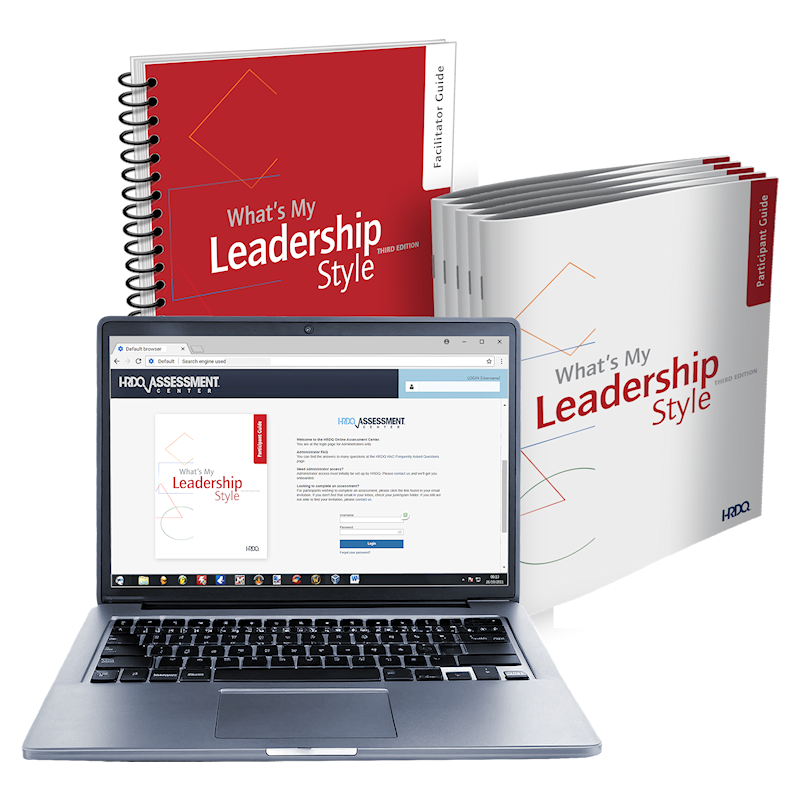
That's exactly what What's My Leadership Style is designed to answer. Developed by HRDQ, this short, points-based assessment reveals which of four core leadership styles you most resemble.
Learning about the different leadership styles helps you become the best leader you can be. By specifying your leadership skills and style, you can learn how to improve them and, consequently, your leadership.
We'll break down the What's My Leadership Style assessment, the four leadership styles, and what this means for you. Let's get started!
- Identify your personal style
- Improve leadership skills
- Effectively lead anyone
Table of Contents
There Are No Right Answers
The most challenging truth many managers encounter is that there's often no correct answer. Life, social interaction, management style, and leadership are not like a mathematical equation; they have multiple solutions to any given problem. While you can determine whether a solution is good or bad, you often won't be able to tell which is which until after the fact.

Likewise, there's no single "best" management style. There are poor management styles and cases where a leadership style is poorly suited to a particular team or task. Neither of those is necessarily indicative that one leadership style is better than all others.
Finding your leadership allows you to do two things.
First, it lets you learn and grow within your style. Different leadership styles grow in different ways. Do you emphasize your empathy and social connections? Do you emphasize your knowledge and skill when leading by example? Do you find new strategies for listening to and adapting to feedback? Some leaders work with some of these choices, while others do not.
The best leaders are not static; they learn and grow over time, becoming better leaders both within their specific teams and specialties and, more broadly, throughout their lives. Most leaders grow through experience, but guiding that growth with knowledge of your leadership style can make you that much more effective.
Second, finding your style helps you recognize how to handle different scenarios and which ones you are not suited to handle. Sometimes, a diplomatic leadership style might not be well suited to a problem that requires decisive, quick action.
Conversely, autocratic leaders might alienate team members and make them feel unappreciated, leading to decreased employee engagement, lower job satisfaction and well-being, and higher turnover rates.
Finding your best management style gives you awareness you can use to handle common problems. Most of the time, a good leader can adapt to other leadership demands, even if they're uncomfortable or outside of their typical style. However, in some cases, a leader may need to step back and allow different leadership to take command, at least until a given task is solved.
In practical terms, they may mean shuffling teams or tasks around, working with a partner leader, or hiring an external contractor for a given project.
The crux of the issue is this: there is no single best management style. Assessments like What's My Leadership Style provide insight and personal growth opportunities, not judgment.
Changing Leadership Styles
Part of being an exceptional leader is continually developing your leadership abilities. Knowing your leadership style is just one part of this decision-making process.
It's important to consider that, as you grow, change, and mature in management, your leadership style may change as well. For example, early in your career, you may have a more team-focused democratic leadership style.
This style can stem from inexperience or respect for your fellow team members. As you learn and grow, you may find that your skills have progressed to a point where you need less input to make leadership decisions. Your team members don't have much to say that you don't already know, either because of your experience or your familiarity with them and their feedback.

As such, your leadership style can change and evolve. Where you may have been a more considerate and spirited leader before, you may now be more direct and systematic. Again, this isn't a bad thing, and it's not wrong to change. However, being aware of your changing leadership style is critical for success moving forward.
Sometimes, the pressure to change your leadership style comes from outside rather than from within.
Instead of using your own experiences to grow, pressures from above or a project's demands necessitate leaning in a different direction.
This is a situation where critical decisions arise for managers and leaders. Do you flex within your leadership style? Do you try to adopt a different leadership style that you may be less comfortable using? Do you attempt to migrate to another project more suited to your style? Do you leave the company altogether and progress your career through mobility? These are, again, all valid options, with no wrong answers.
Four Starting Points for Leadership
In the What's My Leadership Style assessment, four common leadership styles are evaluated. These four styles are: Direct, Spirited, Considerate, and Systematic. Each style has unique characteristics and tendencies. Let's get into them.
Direct Leadership
Direct leaders are assertive and tend to lead by taking charge of situations and making decisions based on their position, past experience, and directives from above. Leaders with a Direct style tend to excel at taking charge of challenging situations, particularly when team members have unsettled arguments or time constraints on a project.

Direct leaders may falter when asked to delegate tasks; they tend to trust only themselves and a small group of colleagues and take on more responsibility than they can handle.
Some also have difficulty relinquishing direct control and trusting their team to implement their plans and make final decisions. Unlike some of the more "hands-off" leadership styles, they might lean too heavily on micromanagement and direct oversight.
Spirited Leadership
Spirited leaders are assertive, but unlike Direct leaders, they tend to lead by example and encourage others to follow. As such, they tend to be highly expressive and charismatic.

Spirited leaders are great at boosting morale and teamwork, particularly during long downtimes, slumps, or seemingly implacable problems. Their spontaneous and creative nature allows them to think outside the box and find innovative solutions or directions for different situations that otherwise become roadblocks.
However, Spirited leaders often live in the present, taking challenges as they come. This style can lead to further difficulties down the road that they could have avoided with forethought and planning. The biggest weakness of the Spirited leader is, in fact, that comparative lack of long-term planning and vision. They tend to be tactical rather than strategic.
Considerate Leadership
Considerate leaders are not very assertive but are highly expressive. They tend to be democratic leaders or to lead by social consensus. They value their team's input and strive to resolve conflicts at every turn, even when they're not directly related to the tasks at hand.

Considerate leaders excel in situations where team harmony is paramount. They foster teams that work well together and use empathy and communication to navigate issues and build agreements among members with conflicting visions. They can also help reconcile seemingly disparate viewpoints.
The most significant drawback of the Considerate leadership style is the lack of assertiveness. Considerate leaders value harmony over productivity and may be unable to take a stand or push back against team members with special interests. Often, particularly aggressive and focused individuals can strong-arm Considerate leaders into getting their way, even at the expense of less vocal team members.
This situation can lead to a crisis in the future, as the overridden and less outspoken team members choose to leave rather than continue working in that environment.
Systematic Leadership
Systematic leaders are typically low in both assertiveness and expressiveness. While this might sound negative, it's still a valid leadership style. According to best practices and established processes, systematic leaders tend to take things one step at a time, working by the book with the resources they have. They spend time building a plan for both short- and long-term operations and executing it, accounting for as many eventualities as possible along the way.

Systematic leaders tend to be highly accurate and effective when given the time and resources to plan.
High-level systematic leaders have the experience and resources necessary to avoid pitfalls and complete projects on time and within budget. They may not be the most inspiring or friendly, but they are highly effective.
The downside is that same thoroughness. Systematic leaders need that time to analyze a situation. They plan their path, and when pressure builds, when unexpected things go wrong, and when time constraints are tight, they may not be able to operate effectively.
Alternative Leadership Styles
These four leadership styles are the ones assessed in the HRDQ Style Suite. They are not, however, the only set of potential leadership styles. If these don't seem helpful, other sets are available. Such resources include the six styles described by PeopleGoal, the seven styles described by Workzone, and the eight styles (four good and four bad).

While these articles do not include assessments, they offer descriptions of leadership styles you can use for self-assessment, such as visionary, authoritarian, bureaucratic, servant, and participative.
There tends to be significant overlap between different sets of leadership styles. We've found that our four primary styles encompass all the "good" leadership styles while excluding negative styles such as autocratic and transactional leadership.
Finding Your Leadership Style
If, however, the four leadership styles identified in the Style Suite sound applicable to you, or if you're unsure what type of leader you are and want to find out, the HRDQ What's My Leadership Style assessment is the perfect tool.

We developed this assessment, along with other assessments and tools, to help business leaders identify their styles, learn about them, and find ways to grow. Every product we offer aims to improve the quality and ability of the great leaders who take them.
When you take the What's My Leadership Style assessment, here's how it works. You are given 20 sets of scenarios, wherein you distribute five points between two opposing groups of actions. Totaling these points reveals the angle of your leadership style and indicates which leadership approaches you align with most.
Armed with this information, you can:
- Identify your leadership style proclivity and which secondary style that you are closest to. This process helps you expand your self-awareness and knowledge of that style and use it more effectively. Tools are best used with awareness, after all.
- Learn the strengths of your style. What are you best at, and how can you augment those already-formidable skills to become a powerhouse of an effective leader?
- Learn the weaknesses of your style. What situations are you most likely to have a hard time handling? How can you work around or plan for these scenarios?
By knowing which secondary style you're most similar to, you can also find ways to "flex" into that style when the situation calls for it. This knowledge helps you act with confidence, knowing it's something you're naturally capable of, which expands your skills, problem-solving capabilities, company culture, and your comfort zone.
What's My Leadership Style is an excellent tool for any leader to build self-awareness and move toward a more thoughtful, self-reflective growth path. It's also perfect for use as part of an overall management assessment or training program. HR directors and other upper management can also purchase additional materials, such as the Facilitator's Guide or a more comprehensive assessment package. Meanwhile, individual managers and leaders can also acquire the self-guided learning package.
While there are no wrong leadership styles, there are poor actions to take. One of those incorrect actions is operating purely on instinct and avoiding learning about your leadership style. Determine your best management style so you can grow as an effective leader with mindfulness and knowledge. You don't have to struggle on your own; others have walked this path before and can help you along the way.