

Top 5 Effective Supervisory Skills & Abilities
Bradford R. GlaserFront-line supervisors are proving to have the greatest influence on an organization's overall success. But what makes a good supervisor?
Supervisors today find themselves in a unique position. They are charged with creating an environment in which their employees can achieve superior performance, yet they often have little control over it. They have to be in charge of all of the work from start to finish, and they are held responsible if goals are not met. Being a supervisor is challenging, but with certain skills, it can be easier and more fulfilling.
Rising regulation, complex technology, cross-functional teams, and a more diverse, educated workforce have transformed supervision. The skills needed today differ greatly from those required when supervisors had full control over teams and their environment.
Let's get into what some of those skills are!
- Discover skill strengths and trouble spots
- Improve performance in 5 key areas
- Understand the core roles of a supervisor
Table of Contents
5 Supervisory Skills Your Supervisors Need
HRDQ's experience and research have revealed that certain identifiable and definable skills, when learned, make supervisors more effective. Below are five key skills.
Guiding the Work
Supervisors need to align with the organization's direction and translate it into actionable plans for the work group. The supervisor’s view of work must be broader than that of his or her employees.
Being a leader, manager, or product leader means understanding the bigger picture, including the organization's goals. Supervisors should clearly communicate and espouse the company values while simultaneously creating a challenging and satisfying work environment.
Organizing the Work
Supervisors assign the right people to the right tasks and provide the necessary resources to meet work goals. Shifting organizational and personal priorities necessitate almost constant reorganization of work.
The supervisor, with responsibilities to the organization, must consider the impact on the bottom line. Equally important is for the supervisor to consider the demands placed on employees. The supervisor must keep their direct reports' needs in mind when organizing the work.
To be most effective and maximize employee engagement, the supervisor is encouraged to understand what motivates his or her employees, be sensitive to their needs, and actively listen and seek their feedback.
Developing Direct Reports
Supervisors know and actively work to improve each employee's skill level. The important component of developing direct reports is gaining knowledge of employees as individuals.
Each employee has their own skills, abilities, needs, and personality. A supervisor who is aware of the unique features of each person in the work group will be best equipped to help them meet their potential.
Investing in an employee’s development takes commitment, trust, a well-defined objective, clearly established action plans, and follow-through by both the supervisor and employee. Delegating work to employees builds the organization's skill base and frees the supervisor to develop their own skills.
 Managing Performance
Supervisors should remove the obstacles to better performance so employees can meet their own and the organization’s objectives. The obstacles to employee performance can be found both within the employee and in the work environment.
An effective supervisor is mindful of and manages obstacles in both areas. A large part of managing performance involves continuous coaching of direct reports to help them achieve their potential.
Coaching begins with looking to the future and deciding what level of performance can reasonably be expected of an employee. Beyond teaching employees how to perform, the supervisor should strive to instill in them the self-confidence in their ability to perform.
Managing Relations
Supervisors should develop and maintain strong relationships with other groups to ensure that their employees and the organization meet their goals. Managing relations should be guided by the organization's goals.
Taking an organizational perspective in dealings with one another puts the supervisor and the other groups on common ground, providing a reasonable basis for decision-making.
When it comes to interfacing with these groups, real cooperation isn't about getting along; it’s about taking into account others' constraints and goals.
Assess and Improve Your Supervisory Skills
Supervisors are the vital link between your organization and its work groups, and as outlined with these top five skills, there's a lot that goes into being an effective supervisor.
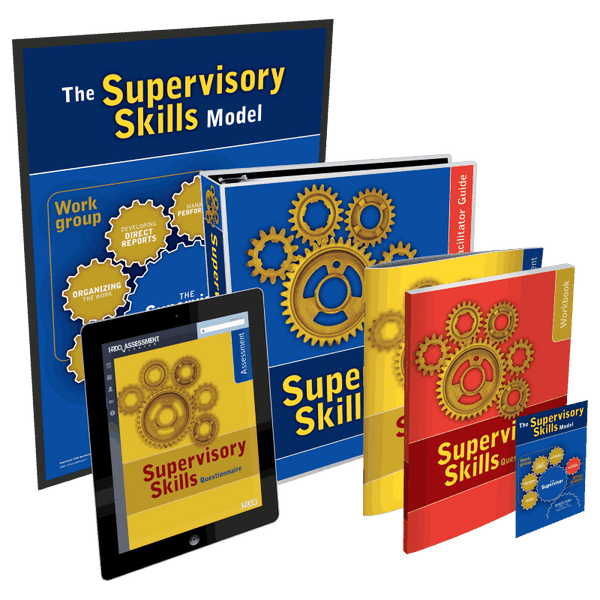
Understanding the necessary skills is one thing, but testing your abilities and developing the tools to become a more successful supervisor is another. It can be overwhelming to try to do so all at once and on your own, but the Supervisory Skills Questionnaire makes it easy.
The Supervisory Skills Questionnaire helps supervisors strengthen their skills in each of the five core areas: guiding the work, organizing the work, developing staff, managing performance, and managing relationships. Start training your organization today, and equip your supervisors with the skills they need to excel!
For an expanded list of top skills supervisors need to succeed, read our post, "Skills for Supervisors: 15 Qualities of a Good Supervisor." And for more information on developing supervisory skills, you may be interested in our blog post, "Supervisor Training: How to Develop a Supervisory Training Program."