

What is the Peter Principle and How to Avoid It at Work
Bradford R. GlaserMost talented pros have seen this play out at least once - a respected colleague earns a promotion and then slowly, almost painfully, starts to struggle once they're in it. The work that made them look great before doesn't quite apply anymore. The skills that got them to that point don't automatically translate into leading a team. The distance between being great at a job and actually leading others is usually vast.
Dr. Laurence J. Peter identified this pattern in his 1969 book, The Peter Principle, and the name stuck for a reason. His main point was pretty simple - in any hierarchy, employees continue to get promoted for as long as they're performing well. The climb stops the minute they land in a position they can no longer manage - and at that point they stay. Not because they've earned it as some sort of final reward. But because the role demands capabilities their skill set doesn't cover.
The effects of this can spread. The promoted employee ends up carrying stress and self-doubt. The team loses a bit of its momentum. The organization absorbs the cost of a bad fit. Anyone responsible for growing talent or guiding someone's career path should know how this unfolds - and what you can do before it ever reaches that point.
Let's unpack the Peter Principle and how you can get ahead of it at work!
- Builds trust and confidence
- Stronger employee engagement
- Improves team decision making
Table of Contents
The Story Behind the Peter Principle
The Peter Principle is one workplace idea that almost sounds too blunt to accept - and once you've witnessed it firsthand, it's nearly impossible to stop seeing it.
That phrase ("rise to their level of incompetence") might sting a little, and it's worth some honest reflection. Most workplaces treat a promotion as a reward. You do great work, earn a better title and make more money. It's a well-intentioned system - the problem is that a promotion usually isn't designed as a fit test - an honest check on whether a person might perform well at the next level. It's more of a thank-you. A thank-you for a job well done in one position doesn't automatically mean that person is ready for a very different one. And in organizations, that difference between the two roles is quite wide.

It's worth asking whether the skills that made someone great yesterday are the same ones they'll need tomorrow. A top-performing salesperson and a sales manager are doing two very different jobs. A talented engineer and an engineering director aren't even close to the same role - the work, the mindset and the day-to-day goals barely overlap. One job is about personal output. The other is mostly about other employees. That shift alone is enough to change what success looks like.
The warning signs of this pattern (and what to actually do about it) are coming up in the later sections. Before we get there, it's worth a quick look at just how this tends to play out inside most organizations.
The Real Reason Good Workers Fail at Management
The theory is simple at first glance. What happens when you put it into practice is a very different matter.
There's a classic example of this - a talented software engineer who solves hard problems, writes clean code, ships features on time and makes the whole team better just by being there. The company rewards that with a promotion to Engineering Manager. Almost immediately, the entire job changes. Code is no longer part of it. From that point on, it's budget meetings, performance reviews, personnel conflicts and the genuine challenge of making sure a whole group moves in the same direction at once. None of these skills has any connection to what earned them the promotion.

A widely cited study of sales organizations found nearly the same pattern. The top performers (the ones who exceeded their quotas year after year) were the natural choice for management roles. And once they got there, most of them fell flat. Their teams actually performed worse than the teams led by managers who had only ever been average salespeople. As it turns out, job performance had very little bearing on how well they led the employees who did it.
That's the gap the Peter Principle has always pointed to. The ability to perform a job well and the ability to lead the employees who do it are two very different skill sets - and one of them just doesn't set you up for the other. What's especially frustrating is that no one ever stopped to ask whether these newly promoted employees had shown any talent for the new role. No test, no trial run, no actual evaluation of any kind - just a promotion that was handed out because they were great at something different.
Early Red Flags That Are Easy to Miss
The Peter Principle is much easier to manage the earlier you can catch it - for the employee, the team and the organization as a whole. The problem, of course, is that the warning signs usually don't make much noise. Most of them surface slowly over time, and by the time a manager stops and pays attention, some damage has usually already been done.
One of the earliest warning signs is a change in someone's energy. An employee who used to be one of your most reliable team members starts to seem worn down - less checked in during meetings, slower to respond and just off. The work that once came to them doesn't come as easily anymore, and deadlines that were never a problem before start slipping. Their output drops in quality, and the difference between where they were six months ago and where they are now gets wider and wider.

A manager who isn't the right fit for the role has a way of pulling the whole team down with them without anyone seeing it. Productivity starts to slip, communication gets spotty, and a low-level frustration slowly takes hold across the group.
The bigger problem with most managers and organizations is that past performance carries way too much weight compared to what's actually happening. A thought like "she's always been so strong - probably just a rough patch" is the reasoning that holds a bad fit in place far longer than it ever should.
Before matters get worse, it's worth asking some honest questions - either about yourself if you've recently stepped into a leadership role or about someone on your team. The real question is whether this role is built around what they do well. For many managers, that is usually the question that changes the outcome.
A Dual Career Track That Actually Works
Most businesses have already diagnosed the Peter Principle problem long before they ever do anything about it. Awareness of the issue and a plan to fix it are two very different matters, though - that gap is where so many businesses get stuck. One of the best structural moves available is to set up what's called a dual career track.
A dual track system is pretty easy in concept - it creates two separate career paths, one for technical growth and one for managerial growth. A talented engineer, say, doesn't have to become a manager just to earn a raise or gain more respect at the company. With titles like Senior Engineer or Principal Engineer available to them, they can get paid competitively and do the technical work that they love and are very skilled at.
And still, so many businesses treat management as the only path forward. A promotion usually translates to team and project management. Any employee who wants to get ahead is eventually going to be expected to step up and lead a team.

A dual track gives high performers a genuine choice between two paths that are equally valued. Leadership doesn't automatically carry more prestige, and the deep technical expertise doesn't get left behind either. An engineer who doesn't want to lead a team shouldn't have to pretend otherwise just to earn a better title or a bigger paycheck. From what I've seen, the businesses that nail this hold onto their best employees much longer than the ones that don't.
A quick aside - this section focuses on the dual career track concept specifically. The next few sections will cover topics like how to promote for potential and also how trial roles can help take the uncertainty out of a promotion call well before it ever gets made permanent.
Past Results Do Not Tell the Full Story
Strong results in your latest role are worth celebrating - a top performer deserves recognition, and a promotion is the natural next step. But past performance in one role doesn't tell you much about how they'll do in a very different one. A great salesperson and a great sales manager need very different skill sets. One needs you to be great at a particular job - the other needs you to get others to be great at that same job. That gap is wide, and it tends to get underestimated.
A skills-based evaluation makes sense here. Who has performed the best and who is actually ready for what comes next are two very different questions, and promotion decisions go wrong when that difference gets missed. Leadership training, cross-functional projects and mentorship programs can all help you get to that answer, and each of them gives you a much better read on how they'll hold up in a new role, well before they are actually sitting in it.

Most organizations skip over this part - and it's not out of laziness, either. The far more common reason is that it's just easier to reward whoever made the biggest impression. As an instinct, it makes sense. As an execution strategy, it tends to fall apart. The person who excelled as an individual contributor may legitimately struggle when the job changes to taking care of the performance of others - and it's hard to undo once the choice has already been made.
A Trial Run Before the Role Goes Permanent
Once you've committed to promoting for potential, there's still one more layer of protection worth adding - and out of everything we've covered, maybe the most helpful. A trial run before the role goes permanent is always worth the extra step.
Interim titles, trial periods and stepping-stone projects all serve the same basic point - they give a person room to grow into a bigger role without anyone locking in on it before they know if it's the right fit. A team lead who fills in as a manager for a quarter, or a senior employee who takes on a high-stakes project before any title change is official - these aren't half-measures. They're one of the better ways to find out what a person is made of when the pressure is on, and the outcome matters.
A trial period will reveal what no interview, performance review or gut feeling ever could. The big question it answers is whether a person gets overwhelmed the minute they're responsible for others' work - or whether they actually step up. Some employees rise to it, and others start pulling back. A few months of direct experience will answer that quite a bit better than any amount of guessing about it ever will.

The protection works in both directions here - it's the part organizations can forget. The employee doesn't get locked permanently into a job they were never a good fit for, and the rest of the team doesn't have to absorb the fallout from a bad fit that no one can walk back. For a low cost, it acts as a safety net for a situation that can spiral into something pretty bad, pretty fast. And the teams that skip over this part are, in my experience, usually the ones who end up paying for it.
More workplaces should be building this into their standard promotion process - a set timeline, a handful of basic goals and a few honest check-ins along the way are all it takes to give everyone a fair shot. When protections like these are built into each stage of the process, the Peter Principle doesn't have to be the foregone conclusion it tends to become - your organization can get ahead of it.
Not Every Great Worker Becomes a Great Leader
Someone can be great at their job and still not be ready for the next step up - that's the hidden truth underneath everything we've talked about here, and it's one that plenty of organizations don't learn until well after the damage has already been done.
That said, none of this has to be a recurring problem. Dual career tracks, a look at what they're capable of and a trial period before any role gets locked in - these are all low-lift changes that most workplaces could pull off without a massive shakeup. What it does take is a genuine willingness to be honest about how promotion decisions actually get made and whether those decisions are putting employees in a position to succeed.

For managers, HR teams and anyone with their next move sitting somewhere in the back of their mind, now's the time to step back and take an honest look at what's going on around you. The warning signs usually show up well before it all falls apart. What it comes down to is whether anyone is paying close enough attention to catch them.
With that in mind, one of the most worthwhile investments an organization can make is to ensure that those who move into leadership roles feel ready for what's ahead.
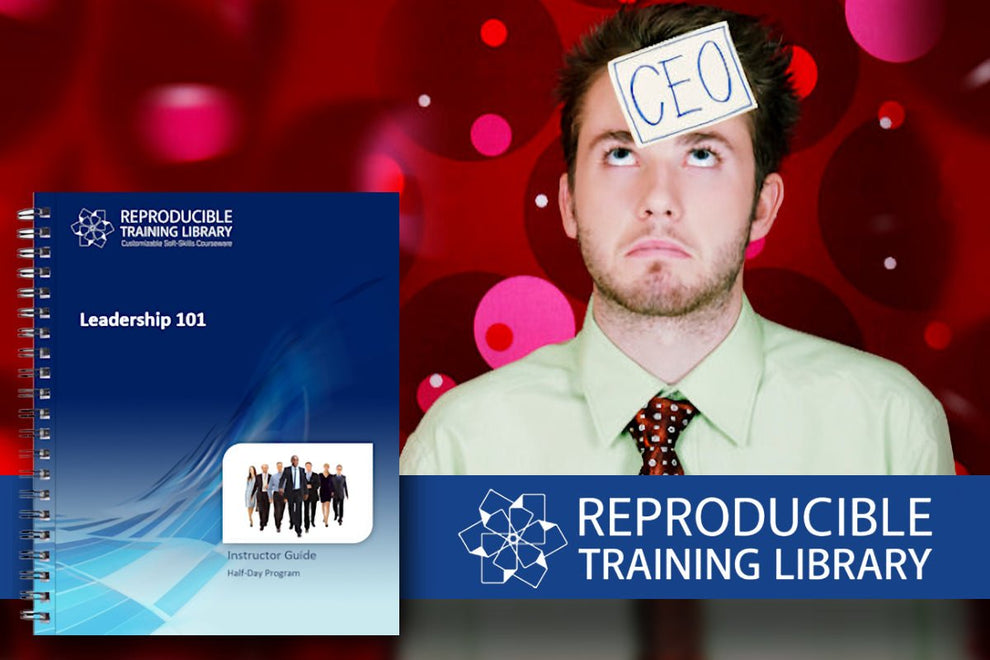
At HRDQStore, our Leadership 101 Customizable Courseware was built just for that. Whether someone is brand new to leading a team or has been doing it for years, it gives them the right skills to build trust, work well with their team and manage the harder moments that the job brings. It's a strong way to help them make that jump from being a great employee to becoming a great leader.