

Intercultural Management Guide: What Is It and Why Is It Important?
Bradford R. GlaserOrganizations of all sizes can benefit from implementing intercultural management training, yet many vastly underestimate just how vital these skills are.
Expanding into a global market or embracing a diverse workforce involves more than logistics, international economics and trade, and taxation. It is just as important to know how to relate to, negotiate with, communicate with, and work effectively with the other cultures to which your employees, partners, or colleagues belong.
Many organizations believe learning about intercultural management skills isn't necessary in today's interconnected world. Nothing could be further from the truth. In this guide, we examine what intercultural management is, why it is important, and how it can benefit your business.
Recommended Assessment
- Be successful in cross-cultural interactions
- Value cultural diversity
- Participate in multicultural discussions
Table of Contents
- What Is Intercultural Management?
- Why Is Intercultural Management Important?
- What Is the Cost of Neglecting Intercultural Management?
- Intercultural Management Skills to Hone
- Recognizing One's Own Cultural Conditioning
- Developing Cultural Awareness
- Establishing Intercultural Communication
- Honing the Ability to Adapt Behavior
- Creating a Welcoming and Inclusive Environment
- Promoting Cultural Awareness and Competency
- Managing Change
- The Best Tool For Intercultural Management
What Is Intercultural Management?
Intercultural management is an interdisciplinary field of human resources focused on the relationship between culture and management. This is an essential tool in organizations composed of people from a wide variety of cultural and ethnic groups or that operate on a global scale.

Effective intercultural management training helps managers and employees move from unconscious, instinctive behavior to a more mindful and conscious approach. This process enhances relationships, builds trust, and presents new business opportunities.
Why Is Intercultural Management Important?
In our global world, intercultural management training is more important than ever. We know effective communication and information sharing are vital in business. Yet, it's easy to underestimate how much cultural barriers and misunderstandings can disrupt this communication.
For this reason, intercultural management skills are among the most sought-after skills in the business world today.

Here are just some of the reasons that this is such an important field in the contemporary landscape:
- International acquisitions and mergers bring together people from different cultures. With intercultural management, information sharing and communication can be significantly improved, making the transition period much more fluid.
- Global expansion requires that managers deeply understand the cultures and differences of new markets. Without this, entering new markets is rife with obstacles and miscommunication. For this reason, intercultural management is essential for international marketing and communication.
- International travel is increasingly common, and the prevalence of virtual communication technology enables individuals at all levels of an organization to interact cross-culturally. Intercultural management can therefore benefit employees across an organization.
- Students can benefit from intercultural management in their forays abroad, helping them glean as much as possible from the experience and enhancing their future abilities in any global business or organization.
- Improved team performance, better project results, and organizational success can result from applying intercultural management tools and skills, thereby facilitating successful marketing and business efforts worldwide.
What Is the Cost of Neglecting Intercultural Management?
Applying intercultural management tools and skills to any organization can be beneficial, and failing to do so can be costly.
It's common for organizations to send individuals abroad who have strong business or technical skills but are not necessarily well-developed in intercultural management and leadership.
For example, an organization is likely to send some of its best engineers to manage production plants abroad, who are highly skilled technically but not in these more interpersonal realms. Local employee motivation and productivity can be eroded when the same management style is applied abroad as at home.
If a business neglects intercultural competence, there are numerous negative results that can occur:
- Reduced employee productivity, motivation, and morale in the host country
- Reduced employee retention in the host country
- Necessitating a lengthy trial-and-error process regarding management abroad, which is costly for the business and creates tension with the local culture
- Missing the mark on marketing efforts due to a lack of understanding of the local culture
- Poor collaboration between teams from different cultures or within diverse teams
- Never-ending negotiations, unexplainable delays, and the failure of high-investment projects
It is estimated that 60% to 80% of international mergers and acquisitions fail because organizations overlook cultural differences. This happens both before the transaction and during integration. Poorly managed mergers and acquisitions damage shareholder value.
At the same time, some of the best employees will grow increasingly skeptical of the transition and begin to look for work elsewhere, leaving the organization hemorrhaging its strongest talent. Beyond that, the whole experience can lead to disastrous stagnation in innovation.

It is all too common for individuals to interact with people from different cultures without an awareness of the invisible conflicts and communication breakdowns they unintentionally create. They are entirely blind to the reality of unspoken contracts within these other cultures, while at the same time adhering to the invisible codes they know to be valid within their own culture.
The reality is that most difficulties in intercultural communication and business dealings do not stem from bad intentions or purposeful insensitivity. Instead, it comes from a lack of awareness, knowledge, and self-reflection.
When intercultural business dealings or marketing efforts go awry, the home culture often blames "the other" and claims that individuals from the other culture are the cause. Failing to recognize that others might view the same scenario differently can ultimately cause high-investment projects to fail.
Even if your company isn't expanding into global markets, that doesn't mean your management team and employees can't benefit from greater intercultural management training. Workplaces are becoming increasingly diverse, and a thriving company must learn to embrace today's landscape. To ensure your organization is on the right track in embracing a diverse workforce, consider the diversity training programs offered by HRDQ.
Intercultural Management Skills to Hone
Improving one's intercultural communication, collaboration, and management skills can benefit the entire organization and help it achieve its global initiatives and goals.

Let's look at some examples of intercultural management skills to help you better understand the various training and tools you can use to boost intercultural communication and collaboration.
Recognizing One's Own Cultural Conditioning
It is all too common for individuals to be shaped by their own culture in their thoughts, beliefs, and actions without any self-awareness that this is occurring. Rather than understanding that they, in part, result from the culture they live in, they see themselves as simply viewing reality as it is.

The more we learn about other cultures, the more we recognize that we all see the world through our cultural lens. When we gain a deeper understanding of how we are shaped by our culture, we see that our perspective is just one of many in the global landscape.
Developing Cultural Awareness
When managers work with people from diverse backgrounds, they must familiarize themselves with cultures from around the world. The same is true of anyone who travels for business or communicates with colleagues, clients, or customers from different countries or cultural regions.

Each culture has its own values, norms, and expectations, and the more individuals within an organization understand and respect these, the greater the business's success in its global endeavors.
Establishing Intercultural Communication
Of course, expanding to a global market can require that members of your organization speak a variety of languages to communicate. There is more to communication than the spoken word, and managers must understand how to effectively communicate with individuals from diverse cultural backgrounds.

Even people who speak the same language can have different expectations and interpretations of body language and non-verbal cues. For example, one person may gesture to be polite, but the other sees it as an insult.
Communication is a complex field, and strong communication skills are vital for a company to perform at its best. To help you and your team better understand your communication strengths and weaknesses, you can utilize our What's My Communication Style assessment and workshop.
Honing the Ability to Adapt Behavior
The more we understand our own culture and others', the better we can adapt our behavior to find common ground with the people we are collaborating with.

On the other hand, communication will be rife with misunderstanding when we cannot perceive our own cultural setting, and how it differs from those of others we are working with, who are entrenched in other cultural perspectives.
Cultural differences are only one of many reasons managers, employees, and customers can struggle to see eye to eye. Another major factor in differing worldviews in the workplace results from the fact that there are five generations that are represented in today's workforce – The Silent Generation, Baby Boomers, Generation X, Millennials, and Generation Z. With each of these own generations commonly possessing different values and generational norms, it's essential to understand generational differences in the workplace to promote teamwork and ensure your company thrives in an ever-changing landscape.
Creating a Welcoming and Inclusive Environment
Building an environment where employees feel accepted and comfortable is essential in the modern workplace. No matter how well-intentioned a manager is, any attempts to create such a culture and environment will likely fall flat if they are not well-versed in different cultural norms and values.

Managers can provide intercultural management training and other resources to help their employees better understand different cultures.
Promoting Cultural Awareness and Competency
The more employees of an organization know about other cultures, the better they are at understanding where their colleagues, clients, and customers are coming from.

Taking the time and expending the resources necessary to help promote cultural awareness and competency can be well worth the effort to ensure you don't suffer from the many potential negative effects of a lack of intercultural management.
Managing Change
When an organization makes big moves and begins a significant transition, it is both exciting and nerve-wracking. Managing change is a skill set in its own right, and expanding into new global markets can be challenging for everyone involved.

Taking a proactive approach to increasing cultural competency as your company transitions from a largely monocultural setting to a multicultural one can mean the difference between success and failure.
Are you searching for more resources to boost intercultural management training within your organization? Make sure you take a look at our guide to improving cultural competence in the workplace.
The Best Tool For Intercultural Management
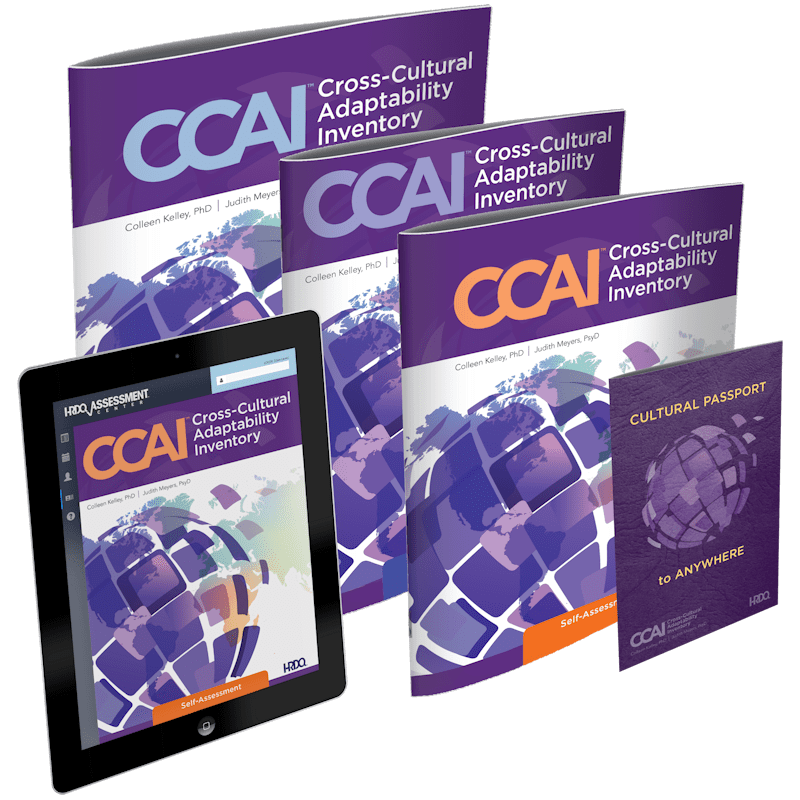
The first step to being more effective interculturally amongst our colleagues and peers is to gain a greater awareness of our own cultural identities. We all have areas of low cultural understanding that can be improved upon, and HRDQ's Cross-Cultural Adaptability Inventory (CCAI) is a powerful tool that helps participants identify where there is room for growth.
During this workshop, participants can identify their strengths and weaknesses in four essential categories – emotional resilience, flexibility and openness, perceptual acuity, and personal autonomy. Mastery in these areas is necessary for successful cross-cultural communication.

There are countless benefits that can result from participating in this workshop– not only will it help your team be more successful in cross-cultural interactions, but it will also present opportunities to select and train global leaders, improve productivity among intercultural teams, and help develop readiness for travel or relocation abroad.
Is it time for your team to hone their intercultural communication and collaboration skills? If so, take a look at our Cross-Cultural Adaptability Inventory workshop today.
After reading this article, do you have any questions about intercultural management training? If you do, be sure to leave them in the comments below, and we'll do our best to get back to you within a day or two! We make it a point to reply to every comment we receive, and we'd be more than happy to assist you however we possibly can.