

How to Run a Premortem Before Your Next Team Project
Bradford R. GlaserProjects usually fail in ways that are almost predictable. The warning signs were typically there – the issue was that teams never had a structured chance to actually say anything about them. Most planning sessions reward confidence and quietly push doubt aside, which means genuine problems just get buried under nodding heads and polite silence.
The space between what a team privately fears and what gets said out loud – that's right where projects start to fall apart. Optimism bias tends to pull everyone's focus toward the best-case scenario, partly because it feels better, and no one wants to be the one who raises a concern that could deflate the room. Group behavior makes this even worse, and the social pressure that comes with it makes it harder for anyone to voice a tough question. The result is a project plan that looks solid on paper but has some very real cracks running through it that the team never dealt with.
Psychologist Gary Klein popularized a strategy specifically designed to close that gap before it does any damage. It's centered on a documented cognitive principle called prospective hindsight – a mental flip that takes hold when a team agrees to treat failure as something that has already happened and then works backward together to trace how it got there. When a plan gets looked at from that angle, it gives permission for doubt. Problems that would normally get swallowed up usually come out because the whole exercise is built around finding what went wrong instead of defending what looks right.
A 1989 study found that this mental flip alone can improve a team's ability to identify reasons for a future outcome by a full 30%!
Let's cover how a premortem can set your next project up for success!
- Discover 5 ways to respond to conflict
- Explore the integrating conflict strategy
- Improve conflict responses
Table of Contents
How a Premortem Actually Works
A premortem is a planning exercise where your whole team sits down and imagines the project has already failed outright and then works backward together to see what went wrong and why. The concept comes from a psychologist named Gary Klein, who developed and popularized it in the 2000s. His core argument was pretty basic – by the time something has already gone wrong, there's not much you can do about it.
A postmortem happens after the fact – once the damage is done and the project has come to an end. A premortem works in the opposite direction and gives your team a chance to have that same honest conversation before anything has actually gone wrong.
The whole reason this works is the framing. Putting it as "we already failed – so what happened?" takes the conversation to places that a normal planning meeting just never gets to. Team members are more willing to voice the anxiety they'd usually keep to themselves because the failure is hypothetical and nobody's being put on the spot. That one small difference in how the question is framed can pull out information – the kind that would otherwise stay hidden until it's too late to do anything about it.

Most teams walk into a premortem and feel fairly confident about their plan, and then somehow still manage to pull five or six dangers out of the room that no one had talked about yet – not because those dangers were some great mystery (they weren't) but because no one had set up the right environment where they could just say them out loud. In my experience, the difference between what a team is quietly worrying about and what gets said in planning meetings is usually wider than anyone would have guessed.
The whole point is to get a fuller picture of what's ahead so you have a shot at planning around the rough places – before they ever get a chance to turn into problems.
How Overconfidence Breaks a Good Plan
Even the most experienced teams fall into the same trap. A plan gets laid out, a few nod along and before long, the whole room has somehow talked itself into a false sense of confidence (not because anyone intended it to) – that's groupthink, and it tends to show up in well-meaning and high-functioning teams.
Optimism bias only makes this worse. Once a team has dug into a plan, it gets harder and harder for them to mentally picture that plan going wrong. The doubts are still there – they just never get voiced, and the meeting ends without anyone saying what they're thinking.

Cast your mind back to the last planning meeting that you sat through – there was probably a point where you started to say something, then paused and just let it go. That hesitation happens all the time. No one wants to be the one who raises a concern and gets all eyes on them. That reluctance is how problems stay buried until they're not small problems anymore – by then they're crises.
The premortem technique, popularized by psychologist Gary Klein, draws on research into "prospective hindsight" – a study by Deborah Mitchell, Jay Russo and Nancy Pennington found that imagining an event has already occurred can increase a team's ability to correctly identify reasons for a future outcome by around 30%. That's worth taking seriously. The team doesn't get sharper overnight – what actually changes is that the format gives everyone permission to say what they were already privately thinking. A premortem makes it safe to voice a concern without it coming across as an attack on the plan or on the person who built it. That one small difference in framing changes quite a bit about what teammates are willing to say out loud.
Most teams leave this part out entirely, and the results of that call are usually pretty rough. Run it well, and it tends to build the team's confidence more than anything else.
How to Run a Premortem Session
A premortem doesn't have to be involved, and the steps are manageable. The whole process starts with a quick statement about what your team is trying to accomplish. That part is mostly just there to make sure everyone comes in with the same understanding.
From there, ask your team to try something a bit unusual – each person needs to imagine the project has already failed, with no coming back from it, and then write down every reason they think it went wrong. No group conversation yet. Everyone works alone and in silence for about 5 to 10 minutes. (The next section gets into why this part matters as much as it does.)

Once everyone has had enough time, open it to the group. Go around the room and have each person share what they wrote, one at a time. As the list grows, patterns will start to emerge – pull the similar problems together and cluster them. Some of what your team names will feel small and some of it will be new to everyone in the room – it all deserves your full attention.
The last step is where a premortem earns its place – and it's also the one I see most teams skip. Take the biggest problems that your team has named and build a direct response to each one right into the project plan itself. Not as a separate document that gets filed away and never looked at again – the actual working plan. A productive conversation is only half of the job (the other half is the follow-through), and that's just what this final step delivers. It's the whole reason a premortem is worth doing.
Write It Down Before the Group Talks
The solo brainstorm is where the actual work starts. Before anyone shares a single word out loud, each person takes a few quiet minutes to write down every worry or possible problem they can think of – all on their own in silence.
In a group setting, the first person to speak tends to set the tone for everything that comes after. Others will adjust their thinking toward that voice, go quiet to stay away from any friction or just hold back altogether because no one wants to come across as the negative one. By the time the conversation winds down, a small handful of voices have done most of the talking – and plenty of the honest problems have never made it into the room.

The basic act of writing is what changes everything. When each person sits down alone and gets their thoughts on paper before the group ever meets, no one is playing to an audience. Research into brainwriting (the practice of putting ideas down individually before sharing them) has repeatedly shown that it produces more ideas and a much wider spread of perspectives than an open group conversation does. What makes it onto paper tends to be quite a bit more honest compared to what anyone would actually say out loud in a room full of colleagues.
That difference matters quite a bit when you want to spot actual problems before they become bigger ones. Quieter individuals and those newer to the team also get just as much of a chance to contribute something real. Their input doesn't get lost in the noise of whoever happens to speak up first. Everyone starts from the same place – a blank page and a few minutes alone with their own thoughts.
Put a Name on Every Problem
A decent brainstorming session will leave the room full of ideas about what could go wrong – and it's also almost without fail the place where most teams quietly drop the ball. A list gets made. Everyone nods, and then nothing changes. The problems wind up buried in some document somewhere as the project moves forward, just the same way it was going to anyway. At that point, it's not a premortem at all – it's just a meeting.
The whole point of it all is to change what comes next. Every issue that the team names needs to be assigned to a person before anyone walks out of the room – who owns it, what are they going to do about it, and when does it need to happen? Those three questions are what separate a worthwhile meeting from one that just produces a list no one ever acts on.

One easy way forward is to go through the list together and put one name next to each item (not a team or a department but one person). When one person owns something, it gets attention. When a whole group owns it, no one does. Add a hard deadline next to that name, and now the whole setup can live on a task tracker or a project board instead of an email thread that no one ever goes back to.
This part of the process can add maybe ten or fifteen extra minutes – and it's also the part that makes everything else worth doing. A premortem without any follow-through is a way to feel prepared without actually being prepared, and there's quite a difference between those two outcomes. That awareness is only half the job. The other half is a firm call, made before anyone leaves the room, about what needs to happen, with the right person already committed to taking care of it.
Without that step, all that careful thinking the team just did stays right where it started – on a whiteboard or a Post-it that gets photographed once and never looked at again.
The Real Cost of Skipping a Premortem
Most teams skip the premortem altogether and jump straight into work. At the time, that seems like the right move. What this does is leave a whole pile of problems without a home – no one owns them, nobody's even named them, and nobody's watching for them.
When something goes wrong mid-project (and something always does), everyone on the team suddenly needs an explanation. Fingers get pointed. Every warning sign that had gone unspoken for weeks starts to come up. The deadline slips, and sadly, the trust tends to slip right along with it. The retro at the end of it all is without a doubt the hardest part of this.

Every postmortem has the same undercurrent – a quiet frustration that hangs in the room as everyone rehashes what went wrong. The team knew it. Maybe not the full picture. But enough of it. The missed deadline, the budget overrun and the friction between departments – none of that came out of nowhere. The warning signs were sitting right there, weeks or months before everything started to fall apart. A premortem is the one chance a team gets to name those risks out loud before any of that damage actually gets done. That one small pause tends to be what separates a project that holds up under pressure from one that falls apart the second something goes wrong.
Failure prevention is only half of what a planning session can do for you, though. A premortem is a great tool for pressure-testing your assumptions before a plan can fall apart. A different session takes care of the other half – one that's built around imagining what success looks like and what it takes to get there.
Try It With Your Team This Week
10 minutes before a project gets started is not too much to ask of anyone. Those 10 minutes (where you put a name to what could go wrong, write it all down and turn the biggest dangers into action items with owners) can do more for a project than hours of trying to fix whatever already broke. The exercise works because it gives your team genuine permission to say what they were probably already thinking (it's not pessimism, it's just preparation).
For anyone who's never run one before, the easiest way to start is to keep it small. Pick an upcoming project, set aside maybe 15 minutes before the kickoff and run through the silent writing step with whoever's already in the room. You don't need a polished format or a long meeting – all it takes is a handful of team members willing to spend a few minutes pretending that the project went sideways.

The teams that actually hold up under pressure aren't usually the ones that avoided every problem – they're the ones that called the problems out early, put one person in charge and kept moving. That communication doesn't come on its own for most teams, and it's something that you have to build over time.
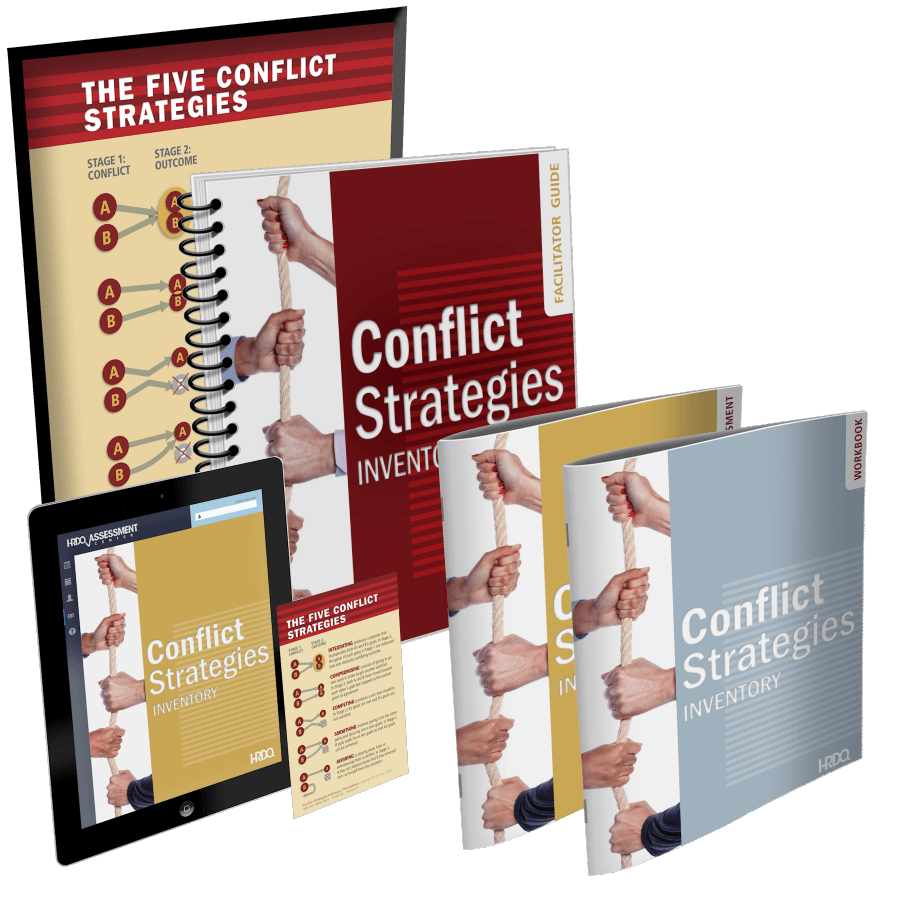
For teams that want to get better at working through disagreement and tension in real time, our Conflict Strategies Inventory at HRDQ is a great place to start – it walks everyone through how they personally manage conflict and gives the whole group a common language to work through it, which is what makes exercises like these hit much harder when the pressure is on.
Learn more about successful project management with our post, "What Are the 10 Essential Soft Skills for Project Management?"