

7 Signs Your Team Needs Conflict Resolution Training
Bradford R. GlaserWorkplace conflict costs U.S. businesses around $359 billion every year, and that's just from lost productivity alone. When projects stall out, the team mood starts to change, and talented employees quit with little warning, there's probably a problem – but pinpointing when normal workplace friction becomes a big issue is tricky.
Healthy debate drives innovation and makes teams better at what they do. Destructive conflict quietly undermines performance and can eventually tear the whole operation apart. It gets tough to figure out which one is happening.
Plenty of businesses miss the early warning signs of conflict, and it's not because the signs aren't there. Conflict doesn't usually show up as some big, dramatic showdown between team members. It's usually a gradual build-up that happens through smaller changes – the way that team members communicate with one another starts to change, collaboration gets harder, and work quality begins to drop.
Studies have found that unresolved conflict can tank team productivity by as much as 25% and it's a big loss for any organization. Even so, many leaders still wait until the situation has turned into a full-blown crisis before they actually step in and handle it.
Teams with repeated conflict problems face higher turnover rates, less innovation across the board, and a workplace environment where even the smallest disagreements have the tendency to escalate into big problems.
Seeing these warning signs early lets you fix the problems as the fixes are still pretty simple – well before you're forced into damage control mode after your top performers have already started to update their resumes and field calls from recruiters!
Here are the warning signs that mean your entire team could benefit from this training!
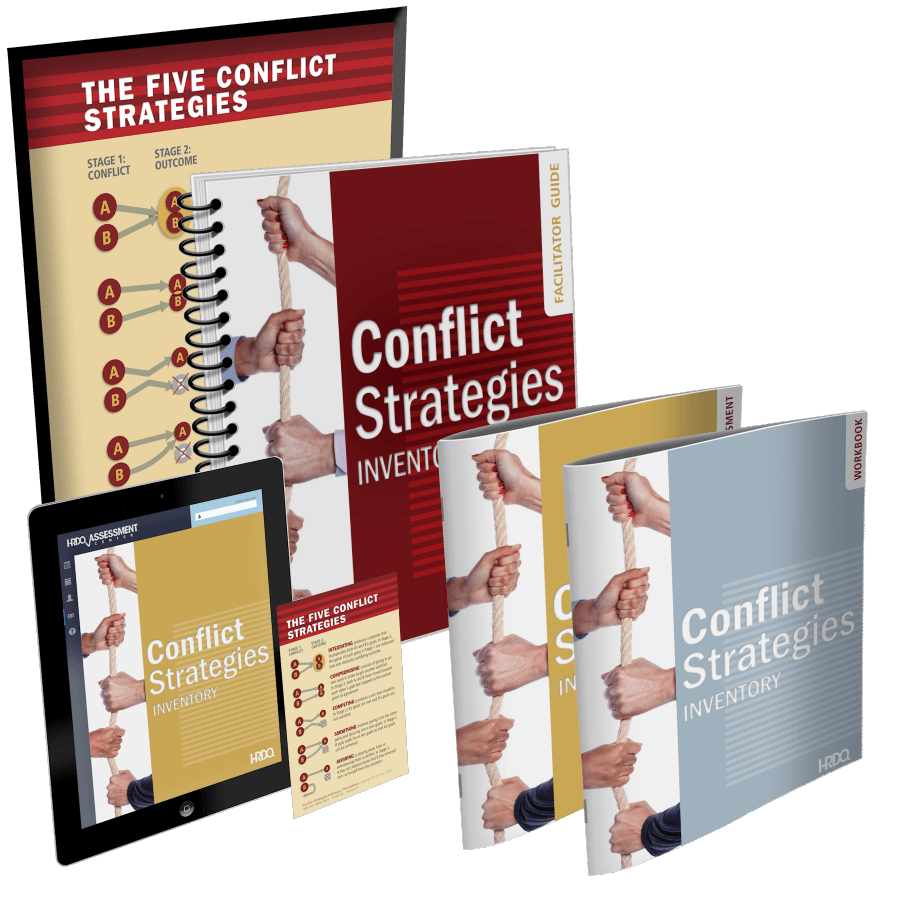
- Discover 5 ways to respond to conflict
- Explore the integrating conflict strategy
- Improve conflict responses
Table of Contents
Work Quality Takes a Major Hit
Projects just sit there and get passed around from person to person. But nothing moves forward. Team members start to stay to themselves and work alone because it feels a whole lot safer than trying to team up with another person they don't get along with.
The data shows the same pattern too – unresolved conflict is directly connected to missed deadlines. When team members can't move past their disagreements with one another, timelines start to slip, and the quality of the final work just doesn't come out the way it should.
It gets worse as time goes on. Employees will actually redo entire assignments that a coworker has already finished because it feels easier to waste the time than to reach out and ask for clarification. On the flip side, some of the team members will leave out important information when they're passing the work along, and yes, sometimes this is intentional.

Performance problems usually have a few layers to them. If your entire team can't communicate well with one another, that problem is going to show up in the quality of their work. The output takes a hit, the small details get missed, and nothing gets better until you can work on these relationship problems first.
When Teams Avoid Direct Conversations
When employees at work start having problems with one another, avoidance can get pretty creative. Email threads will go on for days – even though a quick 5-minute phone call would probably sort everything out. One person sends a message that has maybe a little too much bite in it, and the response comes back with just as much defense. Before long, the entire conversation has taken on this tense, hostile tone that nobody actually wanted to create.
The CC line is another place where this shows up pretty frequently. Managers and teammates get copied on messages where they don't actually need to be involved at all.
Sometimes, it's because a person wants some backup for their position, or maybe they're just trying to build a paper trail so there's a record of everything. Whatever the reason, the person usually wants witnesses more than they want to deal with the tension head-on.

Studies have looked at email arguments multiple times, and what they usually find is that these email exchanges make conflicts worse.
Email strips out most of the human elements that usually help two coworkers work through a disagreement. Your tone of voice isn't there to soften something that might read as harsh. Your face can't show the other person that you're not actually upset or that you were just trying to make a lighthearted joke. Everything turns into flat text on a screen, and what you meant can get misinterpreted by the time it reaches the other person's inbox.
Avoidance patterns get pretty elaborate once employees start running everything through other coworkers as intermediaries. An employee will ask their coworker to relay a message to another employee who's literally sitting just a few desks away. Complaints and concerns go straight to a manager instead of directly to the teammate who's part of the issue.
All these behaviors create distance (and plenty of it!) between employees who are capable of having just a direct conversation with one another. Give it enough time, and the whole team breaks apart, with everyone pulling back into their own isolated corners.
Teams Divide and the Workplace Suffers
When disagreements escalate at work, teams will start to break apart and form their own separate camps. Colleagues will actually choose who they eat lunch with based on which side of the argument they fall on. Project assignments get selected to match whatever their particular group wants to accomplish, and desk arrangements might even get shuffled around so employees can sit a little closer to others on their side.
Information just stops flowing between the groups the way it normally would. One team could have the exact answer that would help another team solve their problem in half the time. They never share it because the two groups have just stopped talking to one another altogether.
Teams that split off into exclusive groups are going to miss the different views and fresh ideas that would otherwise improve the work. Innovation needs team members to share their perspectives and challenge one another in ways that actually help make progress. Once a team divides itself into opposing camps, everyone ends up just talking to the same coworkers who already agree with them.

Work friendships are fine on their own, and it makes sense to like the coworkers that you spend 40+ hours a week with. Most of us will connect with the coworkers whom we like being around.
The problem starts when those friendships turn into an us-versus-them mentality at the office. A healthy workplace friendship shouldn't make anyone feel like they need to choose sides or leave others out. Secret meetings behind closed doors, or conversations that suddenly go quiet the second anyone from the "other group" walks past – those are red flags. None of this is normal or healthy workplace behavior.
Top performers can't stand a workplace like this. Most of them joined your entire team to do great work and make improvements. What they get instead is a total mess where they spend all their time trying to see which alliances and relationships actually matter just so they can do their job. The best employees will eventually leave once they see that they're spending way more time and effort on office politics than they are on the work they were hired for.
Why the Best Workers Walk Away
Employee turnover costs you money every time. But when your best team members leave, those costs can start to add up very quickly. Research from 2023 found that about 60% of employees who quit said that toxic team situations were the main reason they decided to walk away. Your top performers know they have plenty of other options, and they're not about to waste their time in a workplace where conflict just sits there and festers.
When an employee leaves your company, they take a lot more with them than just their belongings. Years of knowledge about your processes, relationships with clients and those unwritten details that actually make everything work day-to-day all walk out the door at the same time. The new person who takes over that role is going to need at least a few months to reach full speed and learn how everything works. Everyone else on the team feels that gap every day.

When a team member who's well-liked decides to leave because of a conflict that's been dragging on, everyone else finds out about it fast. Morale takes a hit, and the rest of the team starts to wonder if maybe they should be updating their resumes as well.
A single departure can set off a chain reaction, and it gets worse when the person who left was a coworker whom their colleagues actually respected and counted on. I've watched entire departments start to fall apart after just one person walks out.
After an employee quits over unresolved conflicts, the employees who stay face their own set of problems. A few of them watched their former coworker struggle with the exact same problems for months, and management never actually did anything to fix it.
That experience changes how the team members view even the smallest disagreements around the office – something that used to seem like no big deal suddenly feels a lot more serious. Everyone's become extra cautious now because they've already seen firsthand that problems just sit there and fester.
Small Issues Become Much Bigger Problems
When a team starts to treat every small disagreement like it's a big battle, there's usually a bigger issue underneath it. A basic scheduling conflict can drag on for weeks because nobody on the team knows how to actually move forward with it. A debate about which project management software everyone should use might blow up and turn into something way bigger than it ever needed to be.
Unresolved tensions can throw off the way that team members respond to new problems down the line. When conflicts aren't dealt with and just sit there festering, teams will, little by little, start to have much shorter fuses for whatever disagreement pops up next.
Every issue that never gets resolved has a way of making the next one feel more personal and a lot more urgent to everyone who's part of it. The exhaustion from this usually sets in pretty fast. Team members start to mentally brace themselves for the dragged-out arguments over matters that should take about 5 minutes to sort out. A basic question about office supplies can become a full-blown power struggle because everyone has learned to see threats in just about everything around them.

Over time, teams start to lose their sense of what actually matters and what doesn't. Everything begins to feel equally urgent, equally pressing. Teams that never figured out how to take care of the small disagreements before they snowball into big problems all wind up stuck in this same mess. It's a way of feeding itself over and over again. Team members remember past disputes and pull that history right into brand-new conversations. A quick choice about when to schedule a meeting somehow gets all tangled up with resentments from 3 or 4 months ago.
Small disagreements that turn into bigger conflicts are actually showing you something important about your entire team. What that pattern is telling you is that team members don't have the right tools to work through these when they come up. Everyone needs to get better at telling the difference between minor problems and big ones, and they also need to know how to deal with tension before it starts to build up and get worse.
Turn the Warning Signs Into Progress
Warning signs are usually visible – they're just sitting out there in plain sight and ready for anyone to see and respond to. Most managers can sense when tension starts to build on their team if they don't quite have a plan yet for how to handle it.
These patterns aren't going to resolve on their own, and the longer they sit there without anyone to work through them, the more likely they are to snowball from small disagreements into big problems that spread to everything – to day-to-day work, morale and even your organization's culture.
Conflict isn't the problem. The damage happens when team members haven't learned how to work through disagreements without derailing progress. Any workplace is going to have different opinions and competing goals that clash from time to time – it's unavoidable if you have multiple team members all working toward the same goals.
The difference between struggling teams and successful ones is that the team members on them have figured out how to work through their differences without wrecking relationships or stalling out the important work.

Helping your entire team get better at working through conflict doesn't mean anything went wrong. Most team members just never learned how to work through this, and that's normal. Almost nobody receives formal training on how to work through tension at work or on what's going on in their head when a conversation gets uncomfortable.
An investment in these skills tells your entire team that you care about their development and you want to build a workplace where they can do their best work. The Conflict Strategies Inventory gives every person on your entire team a way to learn how they respond to disagreements and practical methods to make tense moments more productive.
Once your entire team can see their own habits and try out a few new ways to respond, those little warning signs you've been picking up on might start to turn into something that looks a lot more like progress.