

Your AI, Your Way: How Settings Mirror Personality Style
Bradford R. GlaserThe AI assistants that we all use every day arrive with default settings already in place. Most users change at least something about them pretty soon, though. Some go through all of the settings and toggles and adjust just about everything that they can find. Others might change just one or two items that bug them and then never touch the settings again. These patterns actually tell us quite a bit about how different users like to work and what makes them feel comfortable with technology.
Take any two people and give them the exact same AI tool to set up any way they want. The first person might quickly turn off all of the conversation history and lock down all of the data permissions that they can find. At the same time, the second person leaves the memory features turned on and actually turns on the learning capabilities because they want the system to get better over time. Each person believes they've configured it in the best way.
Scientists have started paying attention to these configuration patterns in the same way that psychologists used to analyze how professionals organized their desks or managed their email inboxes. Stanford and Google DeepMind published an interesting study a couple of years ago, where they found something remarkable. They built AI models with nothing more than 2-hour interviews with participants. These models could then predict human decisions with 85% accuracy.
Those settings that we choose matter significantly. Response length preferences, creativity levels, and politeness filters all add together to create online profiles that are just as personal as our handwriting. The choices that we make in these settings also show quite a bit about our underlying personality types.
Let's talk about how your AI settings can show and strengthen your own personality style!
- Identifies your personality style
- Improves people skills
- Learn how personality drives behavior
Table of Contents
How Your Mind Shapes Tech Choices
Some users will spend hours customizing each little element on their phone. Others just pull it out of the box and start working with it straight away. The reason for this difference goes way deeper than personal preference or simple habit. It has everything to do with the core personality traits that shape every interaction we have with technology.
Psychologists use a framework called the Big Five model when they study and measure personality. This model breaks personality down into five main traits, and these traits shape almost everything we do in everyday life. A person who scores high in openness really loves to try out new features and always experiments with different configurations. A person who scores high in conscientiousness wants organized layouts and also tends to take a more methodical way of organizing their entire online space.
Scientists in human-computer interaction have been tracking these exact same patterns since personal computers first started appearing in homes a few decades ago. The evidence always shows that extraverted users gravitate toward brighter colors and social features in their technology. Users with high agreeableness usually pick interfaces that feel especially warm and friendly to them.

What makes this especially interesting is how our brains actually respond when technology matches our internal mental models. We literally feel more comfortable and relaxed when this happens. A person's personality creates a kind of internal blueprint for how they expect technology to work and behave for them.
Some users get a brand new device and jump right into every menu and option available to them. Other users are perfectly content to leave everything just the way it came right out of the box. Neither way is wrong or somehow better than the other. They each just show a different way that our minds like to process information and work with the world around us.
Every project that I work on shows these same patterns.
The Way You Communicate with AI
Everyone has their own way to start with their AI assistants, and these preferences show quite a bit about their personality and communication style. The way you talk to AI tends to be a pretty accurate reflection of how you like to communicate with others in everyday situations.
Introverts and extraverts actually use AI differently. Most introverts set up their AI assistants to give them the bare minimum. They just want their exact question answered and nothing else. Extraverts do something different. They actually turn up the verbosity settings because they want their AI to give them more information than they even asked for. They also like the extra context and want it when the AI throws in related information to the conversation.
The tone preferences users choose are pretty revealing. Some users max out their AI's formality settings, and others go for the most casual option they can find. This has everything to do with how they see themselves professionally.

Agreeable personality types are the ones who say "please" and "thank you" to their AI assistants. They know that the machine doesn't have feelings or consciousness. They get it completely. Yet somehow they just can't skip the pleasantries. Those polite words are something they need to include, or they feel uncomfortable.
Question preferences split the users into two separate camps as well. Some users want their AI to ask clarifying questions before it gives them an answer. These users hate to receive wrong information and would rather spend the extra time up front to get just what they need. The other camp finds those follow-up questions annoying and just wants the AI to make its best guess straight away. They figure that they can always redirect it later if the answer wasn't quite right.
Your Creative Comfort Zone with AI
The previous section walked you through finding your best communication style with AI. Creativity settings are where we go next, and they show quite a bit more about your personality than communication preferences do.
A certain type of user wants their AI to be unpredictable, fun, and surprising with every interaction. They'll push those temperature settings as high as they'll go, and they'll activate every experimental feature that's available to them. These users usually score high on openness to experience in personality tests. They actually want their AI to take big risks and generate unexpected outputs that can challenge their normal way of thinking.
Then you have the total opposite group of users who want their AI to be careful and controlled. They'll deliberately keep the creativity settings at minimum levels because consistency and predictability are what matter most to them. These users usually score much higher on conscientiousness as a personality trait. Proven patterns and reliable outputs are what they're after – not wild experimentation.

Professional backgrounds also show this split clearly. Artists and writers are notorious for pushing their AI tools as far as they can go. Wild suggestions and unusual ideas are just what they're looking for to spark their next big idea. Accountants and lawyers take a different strategy, though, and keep their AI settings extremely conservative. Accuracy and consistency matter a lot more to them than creative experimentation does.
Safety filters are where you can see this exact same personality split play out. Some users go straight to the settings menu and disable every restriction and filter they can find. They want total creative freedom and hate the idea of anything standing in their way. Meanwhile, the other group does the opposite and actually turns on every guardrail and safety feature available. Both ways of doing this are perfectly fine and normal. What it depends on is how much uncertainty you personally want to deal with when you're doing creative work.
These settings work almost like a mirror for the level of uncertainty you're comfortable with in everyday life. They show how you deal with new ideas and creative challenges and tell you quite a bit about who you are as a person.
Personal Style and Your AI Assistant
We all have our own little habits for keeping a desk organized or mapping out tomorrow's schedule. Those same personal preferences pop up when you start working with an AI assistant. Some workers need every work item split into bite-sized pieces. Other professionals want to have the entire project laid out in front of them from the start. Either way works just fine, and the only aspect that counts is picking whatever clicks with how you think.
The very organized types usually create elaborate folder systems, and they'll tag everything in sight. Reminders get scheduled for everything, and their AI needs to act like a strict coach who never lets anything slide. When AI breaks down a project into twenty small pieces, they actually love it because these steps help them to feel more in control. The spontaneous types take a different strategy and skip most of that structure. The data on this topic is quite fascinating. When your AI organizational style matches up with your natural personality, you'll finish around 40% more tasks than you would otherwise. This comes from picking a setup that fits how you work!

Another big consideration is how much control you want to hand over to AI. Some users feel very comfortable with AI taking care of entire workflows from beginning to end. They have full trust in the system to make smart decisions and execute them properly. Others need to personally approve each step before AI can move forward with anything. Neither style is better than the other, and figuring out your preference lets you configure AI to actually help instead of standing in your way.
Your comfort with delegation shows up in other areas of your life, too. Some managers are great at handing work off to their team and then moving on to the next item. Others need to personally review each detail before they can relax. Whichever way you lean, it'll probably shape the type of AI assistant you want – whether you need a gentle supporter who cheers you along the way or a strict accountability partner who won't let you slack off. Knowing your leadership style can help you understand these preferences better.
AI That Learns Your Personality
Manual AI configuration might finally be on its way out. Apps like Replika and Character.AI are now rolling out personality assessments that take care of the setup work right from the start. Answer maybe five or six questions about yourself first, and the AI reconfigures how it responds to match your communication style. No more digging through menus or tweaking a dozen different settings just to get the AI to talk the way you want it to.

The most interesting part is that many of these AI systems no longer need any personality quiz at all. These programs learn your personality type just from the way you write and the subjects that you gravitate toward in conversation. The technology analyzes small patterns in your vocabulary and can even tell if you like quick answers or if you'd rather take your time and look at ideas from multiple perspectives. Every conversation turns into a data point that helps the system get to know you better.
Of course, this brings up some pretty big questions about privacy and if we're actually okay with this level of analysis. Many people who use these chatbots have no idea that the program is psychoanalyzing them with every keystroke. Recent research shows that these systems can pick up on your personality traits with somewhere between 70% and 80% accuracy. For a computer program, that level of insight is pretty impressive! At the same time, though, the AI gets it wrong roughly 25% of the time, and that's a pretty big margin of error.
There's actually a pretty significant danger with personality-matching AI that not many users have considered yet. Once an AI gets very skilled at mirroring the way that you think and communicate, you might accidentally trap yourself in your own mental bubble. The technology would just continue feeding you more of what you already believe and how you already behave, and it wouldn't challenge you or help you to grow at all. Conversations need a bit of resistance and disagreement because that's what actually makes us think again about our views and learn something new.
The best strategy might not be a perfect personality match between you and your AI assistant after all. Some differences between the way you communicate and the way your AI responds could also make those conversations far more valuable in the long run.
What Your AI Settings Say About You
AI tools are pretty personal if you look at how we configure them. Every toggle, every preference and every little customization creates this personal fingerprint that nobody else has. Technology decisions have gone from standard to something more interesting. They're almost like a mirror for our work habits, our communication preferences and even the boundaries that we set without realizing it.
Many professionals have AI settings that show patterns they've never actually considered. Some hold their automation levels way too conservatively and could let the technology take on more repetitive daily tasks. Others have gone the opposite direction and handed over the work that they actually find satisfying and want to do themselves. All these small adjustments that we make without much thought show quite a bit about how we relate to technology and what we expect from it. Even just experimenting with different configurations for a week or two can change how you work with your tools and what feels right for your workflow. AI technology advances so fast that we're entering territory where these tools might know us better than we know ourselves.
Pattern recognition in our data is the beginning. The recommendations that these systems generate, and especially how we respond to different features, can reveal interesting parts of our professional identity. Maybe we're configuring these tools to line up with the person that we believe we should be. Or maybe they're actually uncovering who we've been all along. Most likely, the answer exists somewhere between those two possibilities, right where human intuition meets computer intelligence and creates something new.

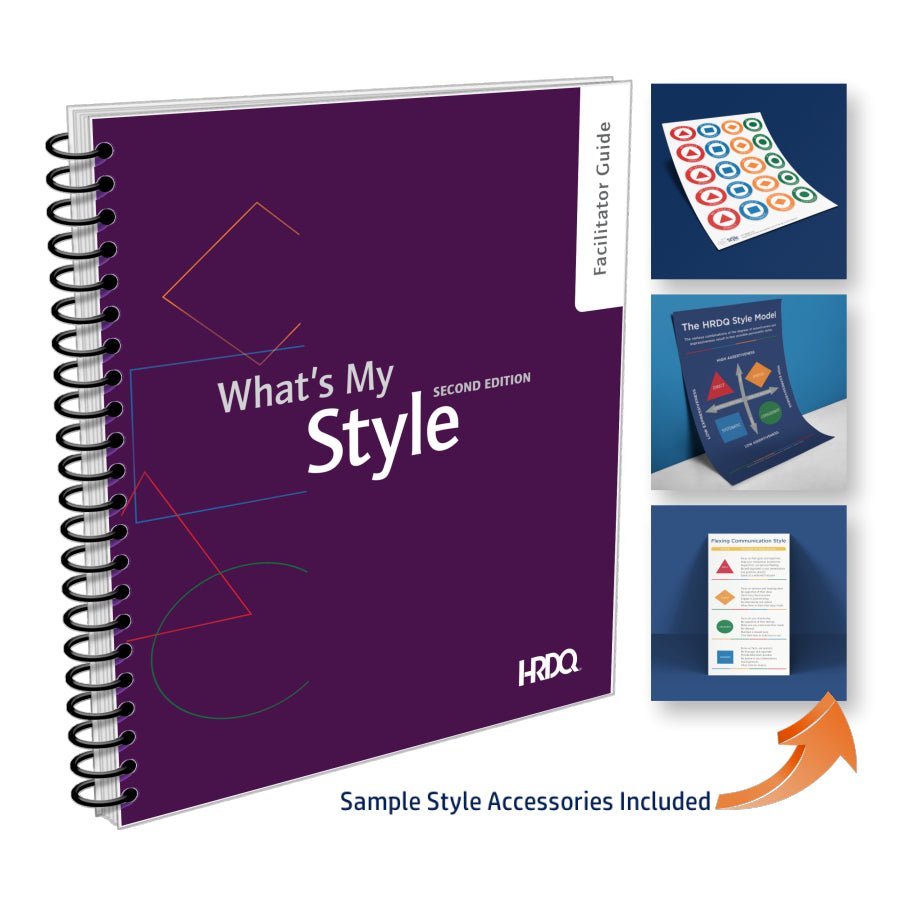
For decades, personality assessments have been tools for helping teams recognize their natural work styles. At HRDQ, our What's My Style assessment maps out personality preferences across four different styles. This framework helps teams to work through their differences and cut down on workplace conflicts. Employees who learn to adjust their communication based on these findings create better collaboration and stronger productivity throughout their organizations.
The assessment also strengthens interpersonal relationships and builds team performance because it gives everyone a practical framework for managing behavioral differences!