

Question Bank Strategy: Write Assessments Learners Trust
Bradford R. GlaserLearner trust in assessments actually forms long before anyone even sees the first question. Test-takers are already figuring out if it's actually worth their time and attention. Are they about to show their true competence? Or are they just going through the motions to check a box?
It's interesting how two training programs can teach the exact same material and yet their assessments can get different receptions. Learners will praise one test as tough but worth it. At the same time, the other one gets written off as pointless busywork. The strange part is that difficulty has nothing to do with it. A question bank can be very hard and still fail to earn respect. This happens when the scoring seems random or unfair, and it happens when the scenarios have no connection to actual work situations. And it definitely happens when one question is impossibly hard and the next one is laughably easy.
Assessment trust can fall apart when there's a disconnect between what a test measures and what it claims to measure. The problem is that the actual questions only reward memorization. The same issue happens when feedback arrives weeks after it would have helped. Adaptive testing systems that feel more like punishment than personalization cause the same trust problems. Strategic question bank design can solve these problems and create assessments that feel legitimate and rigorous at the same time.
Let's talk about how to create assessments that learners actually believe in and value!
- Builds trust in teams
- Drives organizational success
- Increases workplace collaboration
Table of Contents
Make Your Assessment Expectations Clear
Learners who sit down to take an assessment shouldn't have to play detective with the questions. But that's what ends up happening when instructors write vague questions that leave everyone confused about what they're actually supposed to show. The problem has nothing to do with how hard the content is. The problem is that learners can't work out what the instructor wants them to show.
Most of us have taken a test where we spent half our time just trying to figure out what the question was even asking. All that mental energy goes into solving the mystery of the question instead of demonstrating our knowledge. Research by Cassady and Johnson also confirms that this type of uncertainty directly increases test anxiety and interferes with how well students actually perform on the assessment.
The answer is to be transparent about expectations. Every question needs to be paired with specific learning goals. These goals should tell learners exactly what knowledge or skill is being measured. Rubrics matter a lot, too, since they spell out what makes an answer great versus just adequate. These tools don't make the test easier. What they do is make the assessment process much fairer for everyone involved.

Sample answers are very useful tools as well. Learners who can see what a successful response looks like will stop wasting their time on formatting details. They can focus their attention on the content instead. Nobody's giving away the answers by sharing samples. All we're doing is showing learners the target they need to reach.
Scoring guides deserve the same level of transparency. Instructors should explain why some elements earn more points than others. Maybe deep thinking matters more than memorization does in a particular assessment. If that's the case, then learners deserve to know that up front! Everyone deserves to know the expectations before they start.
This transparency creates psychological safety during the assessment process. Learners who know what their instructor expects can channel their energy into demonstrating their knowledge. There's no more guessing about what the instructor wants to see and no more confusion about expectations.
Scenarios That Connect to Real Work
Assessment questions that don't connect to real work situations are a big problem in corporate training. Learners can lose faith in the entire process and question the value of the test itself. It's hard to blame them for this reaction.
Let's talk about two different strategies for testing project management skills. The first way asks for a textbook definition of project management terms and concepts. The second way presents a scenario where two departments are battling over budget cuts and need immediate mediation. One of these actually measures if employees can do the job – and we all know which one.
Scenario-based questions work because they mirror the real challenges employees face every day. Educational research has been telling us this for decades. David Kolb's landmark studies on adult learning showed that retention skyrockets when learners can connect new information to real experiences that they've had or that they might run into. The same principle applies directly to how we should design our assessments.

A different way to handle assessments like this changes how learners feel about them. Employees can show that they know how to work through the real problems they'll face on the job. The assessment turns into a sneak preview of what their day-to-day work is actually going to look like.
The challenge here is to create scenarios that feel authentic as they remain accessible to newcomers. A person with 2 years of experience needs to be able to follow the context just as well as a person with a decade under their belt. This balance takes careful consideration to find – the situation has to feel genuine without requiring particular insider knowledge that only veterans would have.
I've found that the best way to strike this balance is pretty simple. Recent hires can be goldmines of information because they still remember just which parts of their training helped them once they started working. These newer employees can tell you what clicked and what didn't. Industry practitioners bring another valuable perspective because they know the day-to-day problems and sticky situations that never make it into the training manuals. They also understand which scenarios resonate most with different learning preferences.
Different Formats with the Same Challenge
The research on cognitive load theory has plenty to say about this exact problem. There's a limit to how much mental effort our brains are able to process at any given time. If the difficulty is jumping all over the place, learners waste most of their energy just adjusting to the changes. They can't actually show what they know because they're busy managing the inconsistency.
Many educators make a pretty common mistake at this point. They automatically believe that multiple-choice questions are easier than open-ended ones. That assumption is wrong, though. A well-designed multiple-choice question might call for deep analysis and careful thinking. A poorly written essay prompt could just ask for simple facts that anyone could memorize. The format isn't related to difficulty. What matters is the level of thinking that the question asks for from the learner.

Bloom's Taxonomy is actually a great tool to calibrate difficulty levels across different question types. Questions that target the same cognitive level need to feel equally hard to learners, and it doesn't matter if one is a scenario-based problem and another uses a traditional format. A foundational understanding multiple-choice question should demand roughly the same mental effort as a foundational understanding short answer does. The format changes, but the cognitive demand remains constant.
I always recommend that you test your questions with actual learners before you finalize them. Learners are also great at noticing when one question feels way harder than the others in the set. Perfect consistency across every question isn't necessary or realistic, though. What learners actually need is predictability. If they know what level of difficulty to expect throughout the assessment, they can pace themselves appropriately and plan their strategy!
Steps to Maintain Your Question Quality
Question banks need frequent maintenance, or they'll deteriorate quickly. A relevant assessment question from 5 years ago could be outdated for learners. Language evolves all of the time, and the examples that we use in our tests have to keep pace with these changes.
Data analysis is necessary for maintaining the quality of assessments. Performance metrics for each question can show problems long before any learners start to complain about them. A lot of testing organizations use something called the item discrimination index. It's a metric that shows if a question successfully differentiates between learners who know the material and those who don't. Once a question stops performing well, you need to have someone help with this right away.
Numbers alone won't give you the full picture, though. Direct feedback from learners who take your assessments is equally valuable. A quick survey after each test can show which questions felt unfair or confusing to learners. I've seen learners catch problems that a data analysis missed.

The challenge is to find the right balance between responsiveness and security. Quick fixes matter, and you also need to protect your question bank from exposure. Too frequent changes based on complaints might lead learners to manipulate the system. But if you ignore feedback, legitimate problems pile up without resolution.
A structured retirement schedule for old questions solves most of these problems. Documentation of every change and the reasoning behind it matters for your process. Strong records protect your organization when anyone challenges the fairness of a particular question.
Tests That Adapt to Your Answers
Most assessments work the same way they always have. Every learner answers the same questions in the same order, and test-takers don't actually question it anymore. Adaptive assessments can change the game, though. Learners usually feel a bit nervous about them at first, and I get why. Once they actually experience how these tests adjust to their answers, though, almost everyone comes around to preferring the adaptive format.
An adaptive assessment that responds to your answers feels a lot more intuitive than a traditional test. Get a question right, and the next one will probably be a little harder. One wrong answer won't tank your entire score anymore.
The GRE made the switch to adaptive testing years ago, and there's a good reason for that choice. Test takers can finish the exam much faster than before, and the scores are just as accurate (if not more so). Learners don't waste time on questions that are either way too easy or over their heads. The computer zeroes in on each person's actual skill level pretty fast. Corporate training programs can also tap into these same benefits.

The best strategy is all in the calibration, though. When the question difficulty levels are set up correctly, every learner gets an equally fair assessment. The smart strategy is always to test your calibration settings with a few different groups of learners before you launch the assessment company-wide.
The main trade-off is that you'll need a much bigger question bank to pull this off. A traditional assessment might use thirty questions that everyone sees. An adaptive one might need ninety questions in the bank to give the system enough options to choose the right ones for each learner – it's more work on the front end, no question about it. The payoff is that learners spend less time on each assessment. And because the experience feels more personalized to what they actually know, learners usually trust the results a lot more.
Making Assessment Results Work for Your Team
A useful assessment should leave participants with practical ideas about themselves that they can use. The most valuable ones are those that tie directly into what participants face at work every day and the challenges they're already working through. That connection turns the assessment from just another workplace requirement into something that feels more like a set of practical tips for professional growth and development.
I've found that the most successful assessments are the ones where participants really want to know their results. They lean forward and are interested in what the assessment might show them. They see themselves in the scenarios you've created. They recognize how these findings directly apply to their day-to-day work life. We have to move way past those generic multiple-choice questions and actually create something that feels personally relevant to each person taking it. Your learners should finish with specific ideas about how they'll use what they learned. They shouldn't be sitting there and questioning why they had to take the assessment in the first place!
When we get the foundation right, skeptical participants become interested learners. Simple instructions matter a lot. True-to-life scenarios matter too. Variety helps hold learners' interest. Continuous improvement makes sure the content stays relevant over time. And personalized paths help each person get something personal from the experience. These elements work together to create something that participants actually value and want to finish. All of the pieces support one another and build toward that point when a learner realizes that the assessment helped them to understand something new about their work style or team relationships.

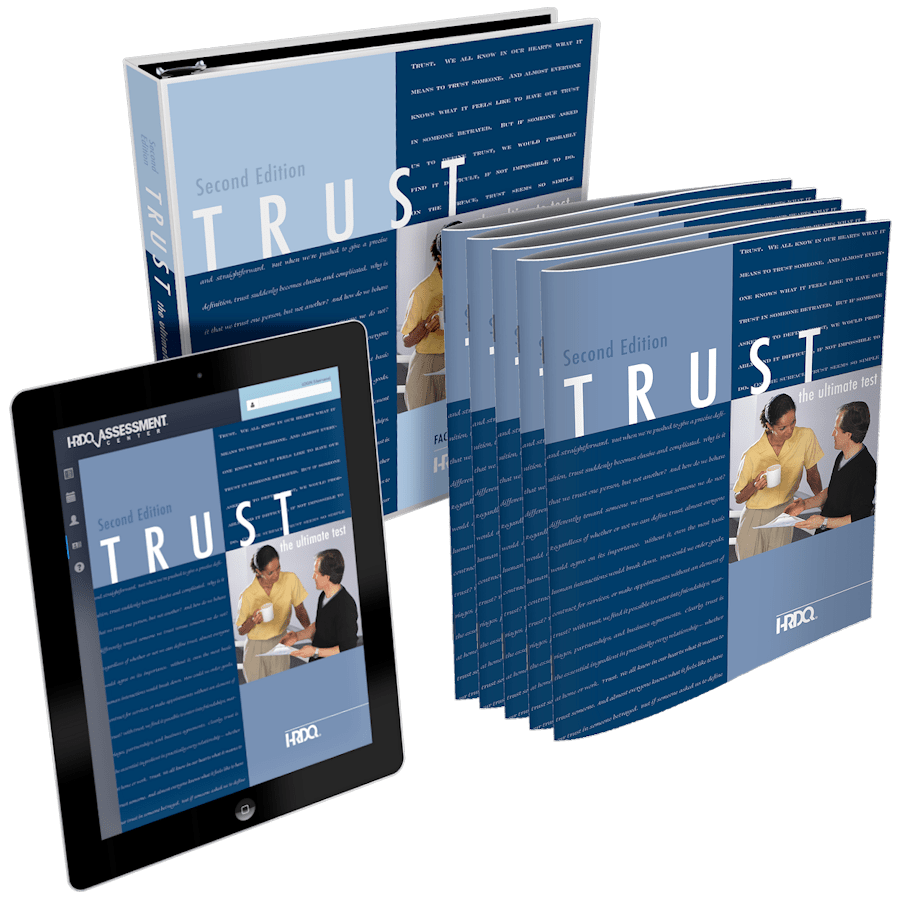
Assessments can also make a significant difference for workplace trust and team relationships. When you want your teams to develop stronger trust and better collaboration, Trust: The Ultimate Test from our team at HRDQ gives you just this type of practical assessment experience. This comprehensive tool helps participants discover their trust tendencies through a 24-item assessment that's paired with an engaging workshop. Teams walk away with hands-on strategies that can improve communication and cut down on conflict. The assessment works just as well for teams in person or teams that connect virtually.
The assessment creates those valuable "aha" moments that actually improve workplace relationships and build stronger teams that last.