

Micro-Credentials vs Certifications: Which One Is Better?
Bradford R. GlaserMicro-credentials sit next to traditional certifications, and your career planning just got tougher. They're all taken at face value by employers. LinkedIn found that 76% of hiring managers see micro-credentials as strong proof of what you can do.
Most businesses care more about your true skills than where you went to school. Your choice of credentials comes back to your goals, and the timing of it matters just as much. They shape how your career moves forward.
Let's look at the differences so you can pick a path that works for you!
- Improve communication skills
- Simple yet powerful
- Practical and easy to facilitate
Table of Contents
- The Ways These Two Credentials Are Different
- Time Needed for Each Path
- How Much Both Options Really Cost
- What Do Employers Think About New Credentials
- How Both Options Test Your Skills
- Ways to Combine Both Credential Types
- Make the Right Choice for You
- Complement Your Credentials with Essential Soft Skills
The Ways These Two Credentials Are Different
Micro-credentials and certifications look quite similar as career growth options. Most working pros assume they work the same way, and that makes sense because they look so similar up front. Once a person digs into how each one works on a day-to-day basis, the distinction shows up.
Micro-credentials act more like focused badges that prove you're skilled at one very narrow skill. Google's Data Analytics program shows what that looks like in practice. If your present job calls for sharper skills, certifications are the opposite – they expect you to learn an entire field to earn the badge. A prime example is the PMP, and it touches on just about every part of project management from kickoff to closeout.
Micro-credentials have a stackable setup that makes them desirable to many working professionals. You can get one badge and then add another next month when your schedule opens up. Each credential stands on its own and carries actual value, but they also fit together in ways that can improve your expertise.
IBM saw this early on and now has micro-credentials that build toward their full certifications. You get instant benefit from each single badge as you still work toward the bigger credential.

Who gives out the credentials legitimately matters. Traditional certifications usually come from bodies that have been around for decades or more. Everyone knows what a CPA stands for because the accounting boards have kept their standards steady for generations.
Micro-credentials come from different places. Universities offer them, tech firms create their own, and online learning sites launch new programs almost every month.
This combination isn't automatically bad for your career – it just means you need to watch who has what and if that badge will carry weight in your field. Your exact career path and goals will point you toward the path that makes the most sense for where you want to land.
Time Needed for Each Path
Everyone wants to know just how long each path will take before they make the call to move forward, what results you're after, and how much time you can realistically dedicate to the process.
Micro-credentials usually take anywhere from two to eight weeks to finish, and the best part is that you can do them without quitting your day job or changing your normal schedule.
Plenty of working pros manage to knock out an entire Coursera specialization during their lunch breaks, or they'll finish up a few modules each night after the kids finally go to bed – this flexibility makes it much easier to stay on track without having to make any big adjustments to your life.
Certifications demand a big commitment. You're looking at anywhere from six months to two full years of steady studying. AWS certification exams are a perfect example – you'd be cramming in study sessions between your day-to-day work deadlines. Weekends and evenings get eaten up by studying, and the timeline doesn't bend much. Work gets crazy, or personal matters come up. You can't pause your certification progress.

Micro-credentials let you control your own pace through the entire learning process. Most of these sites are designed around this flexibility – learn as fast or as slow as your schedule lets you. Certifications have fixed exam dates and hard expiration deadlines that just pile extra pressure onto an already busy timeline.
Technology moves very fast, and cybersecurity and cloud computing change all the time. By the time you finish a traditional two-year certification program, half of the material you learned early on could already be completely outdated. Micro-credentials let you stay current and pick up new skills as the industry changes around you.
There's a psychological side to this that's worth mentioning. Quick wins from micro-credentials help you stay motivated and excited about learning new skills. You get to see progress every few weeks instead of waiting months or even years for that big certification payoff.
How Much Both Options Really Cost
Cost will probably be your biggest consideration here, and the price difference might actually shock you. Most micro-credentials cost somewhere between fifty and five hundred dollars and feel pretty fair. Professional certifications are more expensive, though – plan on spending anywhere from one thousand to five thousand dollars and sometimes more.
You're looking at just the start, though. Exam retakes, if you don't pass the first time, the study guides, and practice tests can add another few hundred dollars. Certifications like Microsoft Azure need to be renewed every couple of years, so you'll continue paying those fees. Micro-credentials are easier – you pay once and you're done.
Your employer could be willing to foot the bill, and here's where the situation gets interesting. Most firms have strong preferences about how they spend money on training. Traditional certifications are familiar to most HR teams – they see PMP or AWS on a budget request and know just what they're paying for. Micro-credentials are still pretty new, so you'll probably need to make a stronger case to get that reimbursement approved.

Salary numbers are where it gets even more interesting. Certifications almost always bring big raises for pros who are already pretty senior. A project manager with the right certification could realistically see a twenty-percent pay bump. Micro-credentials are different, though – they can land you some freelance work and consulting gigs. You could be making extra money in just a few weeks instead of waiting for your next review.
Opportunity cost while you study matters, too. Intensive certification programs can be large time commitments – you might need to scale back your work hours or turn down overtime. Micro-credentials fit around your existing schedule much better, and you can continue earning your full paycheck as you learn during the evenings and weekends. That difference could add thousands of dollars over just a few months.
What Do Employers Think About New Credentials
Whether micro-credentials are actually worth it versus traditional certifications depends heavily on the place you want to work. Most of the big tech employers, like Google and Amazon, will accept their own micro-credentials as proof of your skills. Healthcare and finance firms have to follow much stricter laws that force them to stick with traditional certifications.
Recent data shows that about 34% of hiring managers now view micro-credentials as worth as much as traditional certifications when making promotion decisions. That percentage might not sound like much – this marks some pretty big progress in how employers see alternative credentials, though.
Just five years ago, hardly any managers would accept a micro-credential for career advancement. Roughly one in three managers now treats them as legitimate options, and it's actually a pretty big deal.

Silicon Valley is a great example of how the whole community is changing. Udacity nanodegrees have earned respect at tech startups and even some of the bigger, established firms out there. Go to an investment bank with anything other than an official CFA certification, though, and you won't get very far. They won't take you without the traditional credentials. Whoever's making the hiring call will view your micro-credentials based on their age, too – younger managers are usually more open to these alternative qualifications. Executives who have been around for decades will usually follow the traditional path.
Geography plays a part in this, too – employers in tech hubs like San Francisco and Austin will usually welcome non-traditional credentials. Businesses in more conservative markets will stick with the traditional methods.
Look at how job postings are worded. If a listing says "bachelor's degree or equivalent experience," that phrase can mean very different results from one company to another. Some employers actually do accept alternative credentials and will treat them as legitimate, and others just copy and paste standard language without ever thinking about what else they might allow.
Your best move is to research your exact industry and even the particular employers that interest you before spending time or money on pursuing a credential.
How Both Options Test Your Skills
Employers scan through your resume to find out if you can get the job done on day one. Micro-credentials and certifications can vary mainly in how each one answers that question. Micro-credentials focus heavily on very particular skills that you can put to work.
A micro-credential in Python for data analysis is a perfect example, or maybe one that walks you through building dashboards in Tableau from start to finish. These shorter programs do a great job of showing that you can do one job well. You usually finish with a capstone project that proves how to analyze customer data or set up automated workflows – it's a pretty narrow focus, but it digs quite deep into that one area. Students walk away with skills that they can put to work in an actual job.
Certifications are completely different. A certification wants to see that you understand concepts like change management theory, and you've already been leading projects for a few years. Most of the big certifications that are out there won't even let you sit for the exam until you can prove you have that experience under your belt.

Cloud computing shows these two paths working side by side well. You could knock out a micro-credential that teaches you to deploy applications on AWS in just two weeks. Or you could spend months preparing for an AWS Solutions Architect certification that covers more ground – it digs into security principles and architectural best practices that most micro-credentials don't have the time to include. You get helpful experience faster and with less of a time commitment through the micro-credential.
Up-to-date knowledge usually beats deep knowledge for your career. That new micro-credential in the latest AI tools that you picked up just last month might well be worth more to employers than your three-year-old machine learning certification that seemed new back then but now feels dated.
Ways to Combine Both Credential Types
Pros working in different industries have stopped picking just one path between micro-credentials and certifications. They're mixing the two throughout their careers now, and it makes perfect sense given how fast industries evolve and what hiring managers actually care about.
Most pros earn micro-credentials first, then move on to full certifications later. You might take a quick course on data visualization just to see if you like the work. Once you find that you love it, you can justify investing quite a bit of time and money into a full analytics certification. It's a safe bet because you're not putting all your money down on something you've never actually tried.
Other workers take a different strategy – they get their core certifications as they pick up micro-credentials for newer technology. Think of a project manager with a PMP certification who can add micro-credentials in Agile tools or AI project management. Their main certification shows that they get the basics, and those micro-credentials prove they're staying current with the latest changes in their field.

Where you are in your career usually decides which path makes the most sense at any given time. Early on, certifications can help build credibility if you don't have much experience to point to. Later, micro-credentials become pretty helpful for pivoting into new areas without having to start completely over. A marketing manager might already have a Google Ads certification secured. They can also add HubSpot or Salesforce micro-credentials once the company rolls out new systems.
Career experts recommend putting together what they call a credential portfolio. Create a combination that shows deep knowledge in your field and proves range across different work areas. Employers find this combination appealing and see strong fundamentals and the flexibility for taking care of whatever comes next – it also gives you some insurance. If one of your credentials gets outdated, the others still carry weight, and I see that happening in today's job market.
Make the Right Choice for You
Budget is probably going to be one of the biggest factors you'll weigh, and there's a pretty big cost difference between these two options. Most micro-credentials fall somewhere in the fifty to five-hundred-dollar range per credential. Professional certifications cost more – you're looking at anywhere from three hundred dollars, and can hit three thousand or even more. And those price tags don't include the study materials and prep courses you'll probably want to buy.
Flexibility matters when you're weighing these two options. Five micro-credentials let you show your skills across a few different areas, and this breadth can be helpful for some career paths. A single professional certification gives you much deeper credibility in one particular field, and each option has its benefits, and your career goals will tell you which one makes the most sense.
Employee reimbursement can completely change the whole cost picture for you. Most employers actually have pretty basic policies around professional certifications, and they'll usually cover the full cost. Micro-credentials are where it gets a bit trickier, though. Some employers treat them just like normal professional development costs and reimburse them completely. Others won't even see them as something worth reimbursing.

Complement Your Credentials with Essential Soft Skills
Looking at your next certification or credential can tempt you to get lost in all the technical specifics. Technical knowledge matters, yet it's only part of what actually helps your career take off.
Your technical expertise can get you in the door, but soft skills, such as communication, building relationships, and active listening, determine how far you'll go. For example, a project manager with PMP certification might excel at processes, but without strong communication, team alignment may suffer and projects fall short.
At HRDQ, we have communication skills programs that take on this very problem by helping teams get better at their communication through three core areas of development. Feedback and responding to feedback as you're demonstrating your latest certification or sharing your expertise is what turns that knowledge into something helpful on the job!
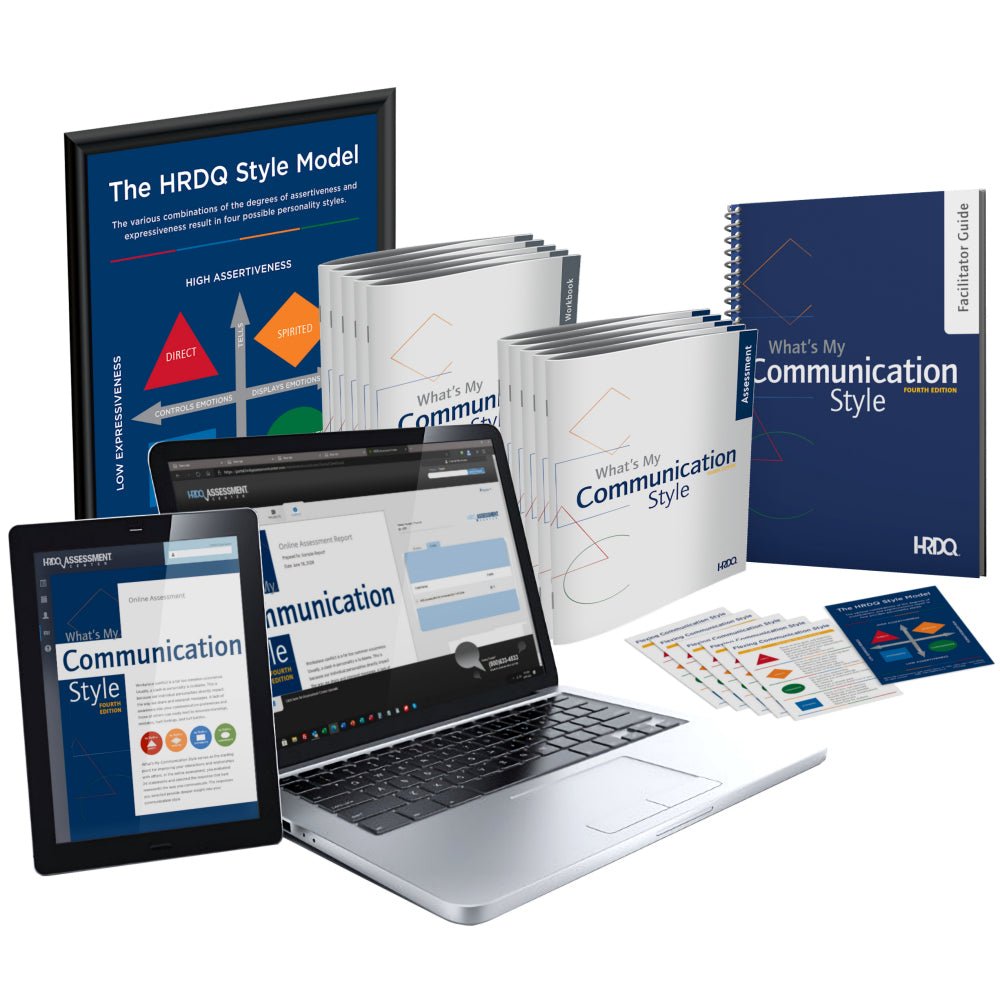
Get started with What's My Communication Style. In just 20 minutes, you can discover your unique communication style and learn how to rely on your strengths while mitigating your trouble spots to effectively communicate with anyone.