

How You Can Use The HEARD Method – Definitions and Tips
Bradford R. GlaserTough conversations at work usually fall apart pretty fast, and nine times out of ten, it happens because a person reacts before they've had a chance to actually think about what's going on. A customer gets upset and starts to raise their voice, and the employee on the other end thinks they're under attack in that second and gets defensive. A manager sits down to give some constructive feedback, and just like that, the team member has already tuned out completely. Studies have found that roughly 70% of workplace mistakes can be traced directly back to communication breakdowns – and most of them would have been preventable if the workers just had better feedback skills and knew how to respond with more care.
Pros know that they need to stay calm when situations get tense. Roughly 50% of all customers will walk away from a brand after experiencing just one negative interaction. That type of statistic puts the possible damage from a single mishandled conversation into perspective for any business owner.
The HEARD strategy gives you a framework to take care of these tough conversations when emotions are running high and tensions start to escalate. It's a 5-step strategy that can help just about anyone take what would normally become an angry, unproductive argument and guide it toward a resolution.
Here's how the HEARD strategy works so you can start putting it to use!
- Determine listening effectiveness
- Overcome barriers to listening
- Create an action plan
Table of Contents
How the HEARD Method Works
The HEARD framework has five steps, and they all work together so you can get through tough conversations with customers or coworkers.
H stands for Hear – listening to the customer's entire story without interruption to understand their issue fully. Engage is next – it's where you open up a dialogue with the other person. Then Affirm comes after, and you let them know that you get where they're coming from, and their perspective makes sense. Respond is where you actually help them out or at least show them the path forward. The last step (Diagnose) closes out the conversation so you're on the same page about what comes next.
Each one of these steps plays a different part in the process. Hear gives you a second to set your frustration aside and reset your mindset so you can continue. Engage helps you build rapport and trust as early as possible. Affirm shows the other person that you hear them and that what they're saying matters to you. Respond is where you address the issue at hand. The last step wraps it up so you know what comes next.

When teams try a structured system like this one, the results can be pretty strong. Zappos is probably the best-known example of it working at scale. After they rolled out a system like this, their customer satisfaction scores shot up by 23%. The reason for that improvement was that their support teams now had a reliable way to work through tough conversations with customers, and it made the difference in how those interactions played out.
This whole system works best when you follow it as a system – not as a menu where you can pick and choose the parts that work best, and each step in the process builds on the one before it and sets up the one that comes after it. Skipping around or rushing through any part of it will cause you to lose some of the effectiveness that makes it work. The strength of this framework is that it covers both sides of conflict resolution (the emotional side and the tactical side) at the same time.
How to Follow the HEARD Steps
Step one is pretty easy – "Hear." Stop and listen for about 24 seconds to think before responding. That short window gives your brain the chance to switch from autopilot reactions to genuine thought. A couple of deep breaths in those seconds lets the thinking part of your brain (the prefrontal cortex, if we're being technical) actually catch up with whatever emotions are bubbling up. The difference this creates in how your conversations play out is large.
After you've done that, the next step is engagement, and your body language matters just as much as the words coming out of your mouth. When you're talking to another person, just face them directly and make sure that your arms and posture are relaxed and open. Lean in just a little bit to show them you actually want to hear what they're saying. These gestures go a long way in showing the other person that you're present in the conversation and that you care about their perspective.

The affirm step doesn't mean that you have to agree with everything the person says to you. What you're doing is recognizing what the person feels without shutting them down or waving their problems away like they don't matter. When another person is frustrated with you, you can let them know that their frustration makes sense. Just that acknowledgment on its own can help to calm the whole situation down.
Then you want to respond in a measured way instead of just reacting on impulse. Ask yourself what this person needs from you in this second. Take a second and think about what support would be the most helpful to them first.
The final part is to land on something concrete that you agree on for the next step (sometimes it's just scheduling another conversation or maybe putting together a plan for how to move forward). What matters is that the other person walks away with a sense of the next step instead of wondering what's supposed to happen from here. If you don't have a concrete action item, you might find you're having this exact conversation all over again because nothing progressed the first time around.
Where to Use the HEARD Method
Remote teams work through communication problems in a way that's even harder than in-person teams, and the HEARD strategy can help them. Video calls and text messages remove most of the body language and facial expressions that we normally use to tell what a person actually means. A 2023 study found that teams that used structured frameworks for hearing others out (like HEARD) had 31% fewer misunderstandings compared to teams that didn't use any particular strategy or framework.

Customer service teams can benefit from it too. When a person calls in already angry and frustrated about their problem, a customer service rep who actually listens and shows some empathy first can turn that conversation around. Performance reviews are another situation where HEARD helps. Emotions run high on each side during those conversations, and it changes how they go.
Families who need to have hard conversations can use this exact same framework. Eldercare, money and inheritance planning – none of these topics are fun to bring up, no matter how close you are to one another. The whole conversation tends to go much smoother when you take the time to get where each person is coming from before anyone starts trying to solve problems. Family members are usually quite a bit more willing to share what's bothering them when they feel like you're paying attention, instead of just shutting down or becoming defensive from the start.
Emergency room nurses have used a technique that's pretty close to HEARD for years – it's also the case when they need to calm down worried families in high-stress situations. When families are upset or overwhelmed, they won't listen to what you're trying to tell them until they feel like you've heard them out first. The same principle applies if it's a disagreement between coworkers or a tough conversation with your spouse at home.
HEARD proves itself when emotions start to run high. Normal conversations usually fall apart pretty fast once a person gets upset or starts feeling defensive. A framework like this puts where others are coming from first, and it makes all the difference because it opens up space for genuine dialogue to happen – the kind where each party is hearing one another instead of just mentally rehearsing their next point.
Mistakes That Kill the HEARD Process
When customers have problems with the HEARD framework, it's usually the Hear step that gets rushed. Users wait for maybe a second or two – nowhere near enough time for the other person to process what's going on. Studies have shown that between 20 and 24 seconds of silence makes a real, measurable difference in how heard they feel during a conversation.
The Affirm step is where the second most common mistake happens. Responding with "I get it" or "I hear you" before actually absorbing what was just shared causes a problem – this hollow affirmation usually makes matters worse because the other person will pick up on the fact that you just checked a box. They walk away and feel brushed off instead of validated, and it's the exact opposite of what you were trying to accomplish.
The Respond phase has its own trap to watch for. Users jump straight into fix-it mode before they actually get what the other person needs from them. Halfway through the story, you might find what looks like an obvious answer. Jumping ahead, like early assumptions usually miss what's actually going on. When that happens, the other person ends up frustrated and has to backtrack and explain the whole situation all over again from the start.

Skipping the "Diagnose" step is a mistake that always comes back around later. If you don't have an agreement on what comes next or what the outcome should be, that same argument or issue just shows up again and again. The whole conversation will feel incomplete.
Workplace research found that any one of these mistakes can drop HEARD's effectiveness by as much as 40% – and this usually happens for the same two reasons. Either they move through the process too fast, or they don't give each part enough time and attention!
Other Tools That Can Help You
HEARD is a strong framework that works in most de-escalation situations. Of course, it's not the only way you should have available to you. A few other techniques complement it quite nicely, and each of them tends to be more helpful depending on what type of scenario you're in.
LEAP is another idea, and it stands for Listen, Empathize, Apologize and Partner – it works best when you'll have to apologize or rebuild trust after you've made a mistake and gives you an easy path to own what happened and then work together with the other person to help with the situation. HEARD sometimes seems a bit too quick with answers when all they want from you is a real, honest apology. None of these frameworks are going to replace HEARD – they just give you some more options to work with.

LEAP is usually a better fit if you owe them an apology, and HEARD makes more sense if you'll have to work out an answer together. DESC works best when you have to set some firm limits or spell out your boundaries nicely and directly.
The Ritz-Carlton does a great job with this type of strategy. Looking at how they train their staff, each team member learns to choose which type of response makes the most sense for whatever situation they're in. They don't use the same exact technique each time – they adapt based on what's actually going on in that situation.
Learning a handful of these techniques gives you quite a bit more flexibility when the conversations get tough. Some people will respond well to one strategy, and others might need something different. That can depend on their personality and their background. Having a few tools to work with makes it much easier to adjust on the fly, no matter who we're talking to.
Put the Method Into Use
One of the best parts about working with it is that it forces you to slow down and actually be present in a conversation. People race through interactions and only half-listen because they're already thinking about their next email or what they need to do after it's done. Take these five intentional steps during a conversation, and you'll look great right away. Others can tell you're actually tuned in to what they're saying, and they respond to you differently. The trust that builds from this focused attention turns into the base for everything else – whether it's solving problems, taking care of conflicts, or just working together on work tasks. It beats just about any quick fix or shortcut you could try.

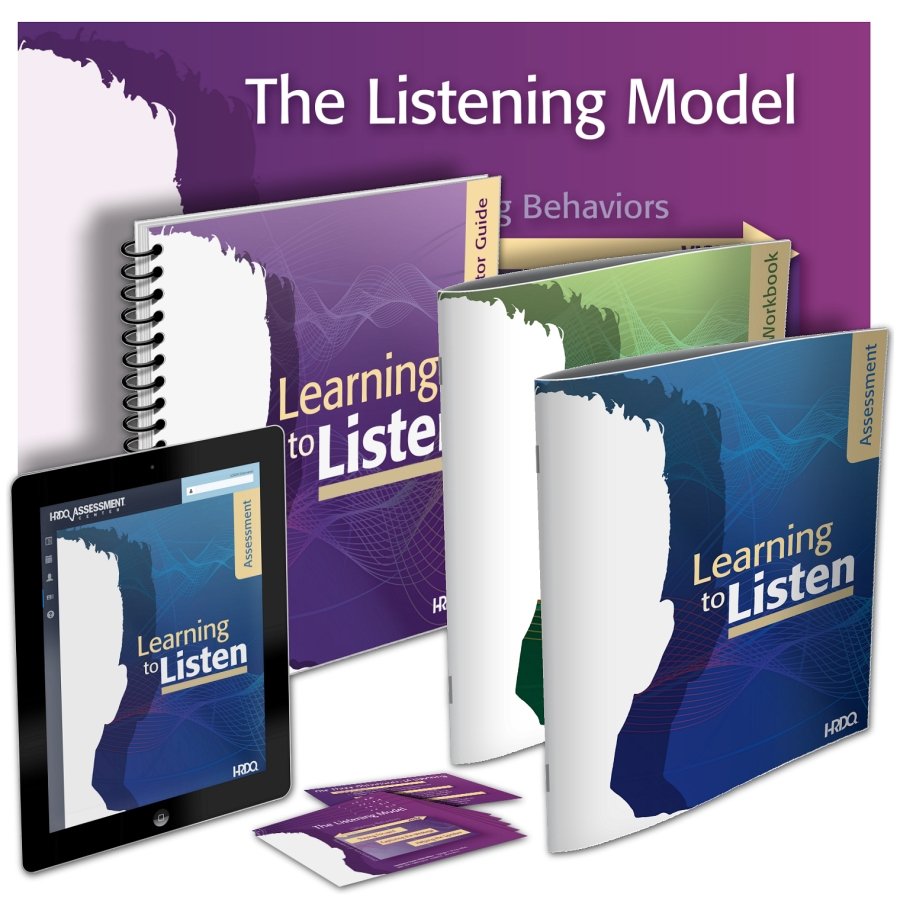
The HEARD Strategy makes sense when you read about it. But the real test comes when you try to use it in actual conversations. Getting better at feedback is like most other skills – it takes awareness, consistent practice and sometimes a little outside help to figure out which areas need the most attention. We created our Learning to Listen assessment to give you a structured way to measure where you are and where you can improve – it breaks down how well you stay focused during a conversation, how well you pick up on the messages that are being sent and how well you support the other person as you're talking with them. The assessment helps people and teams to move past genuine intentions and start making real, measurable changes in the way that they communicate every day.